

How does a resistance strip work in a sensor circuit?
Aug 07, 2025
Hey there! As a supplier of resistance strips, I often get asked about how these little components work in a sensor circuit. So, I thought I'd take a few minutes to break it down for you in a way that's easy to understand.
Let's start with the basics. A resistance strip is essentially a long, thin strip of material that has a specific resistance value. This resistance is what makes it useful in a sensor circuit. When an electric current passes through the resistance strip, it encounters resistance, which causes a voltage drop across the strip. This voltage drop can be measured and used to determine various things, like temperature, pressure, or even the presence of a particular substance.
The Physics Behind Resistance
Before we dive into how a resistance strip works in a sensor circuit, let's quickly go over the concept of resistance. Resistance is a measure of how much a material opposes the flow of electric current. It's measured in ohms (Ω). The higher the resistance, the more difficult it is for current to flow through the material.
The resistance of a material depends on several factors, including its length, cross-sectional area, and the type of material itself. For example, a longer wire will have more resistance than a shorter one, and a thinner wire will have more resistance than a thicker one. Different materials also have different resistivities, which is a measure of how strongly they resist the flow of current.
How Resistance Strips are Made
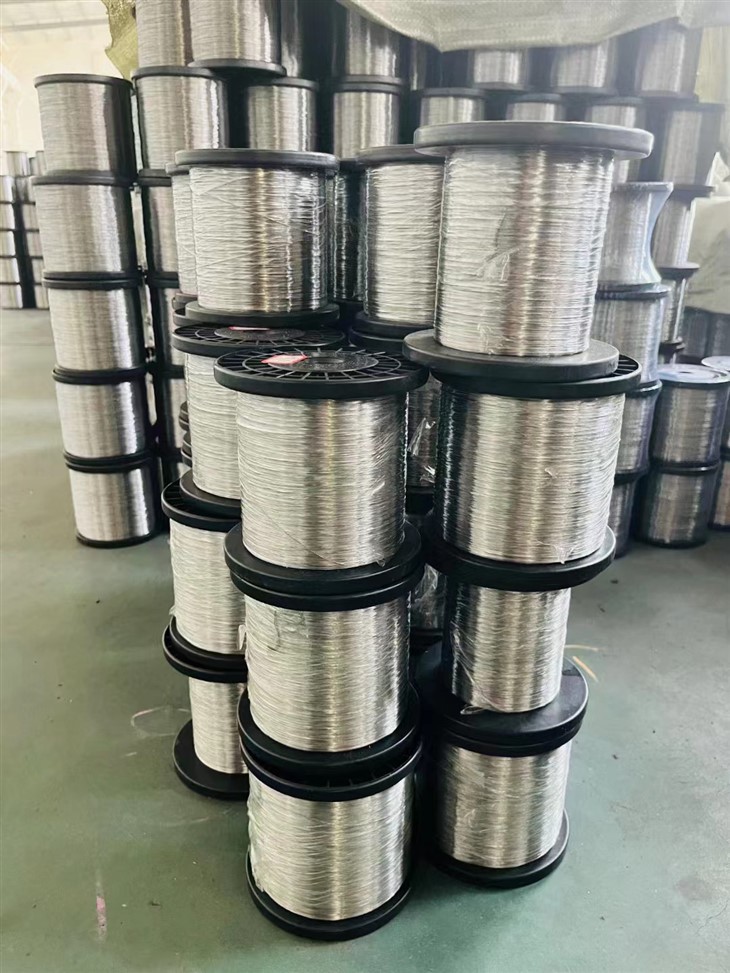
Resistance strips are typically made from materials with a high resistivity, such as nichrome or 0Cr21Al6Nb. These materials are chosen because they can maintain a stable resistance over a wide range of temperatures and conditions.
The manufacturing process for resistance strips involves several steps. First, the raw material is melted and drawn into a thin wire. This wire is then cut into strips of the desired length and width. The strips are then heat-treated to improve their mechanical properties and to ensure that their resistance is stable.
Resistance Strips in Sensor Circuits
Now, let's get into how resistance strips work in a sensor circuit. There are many different types of sensor circuits that use resistance strips, but they all work on the same basic principle: changes in the environment cause changes in the resistance of the strip, which can be measured and used to detect the change.
Temperature Sensors
One of the most common applications of resistance strips is in temperature sensors. In a temperature sensor, the resistance strip is made from a material whose resistance changes with temperature. As the temperature increases, the resistance of the strip also increases, and vice versa.
The relationship between resistance and temperature is usually linear over a certain range, which makes it easy to calibrate the sensor. By measuring the voltage drop across the resistance strip, the temperature can be accurately determined. This type of sensor is commonly used in thermostats, ovens, and other temperature-controlled devices.

Pressure Sensors
Resistance strips can also be used in pressure sensors. In a pressure sensor, the resistance strip is attached to a diaphragm that deforms when pressure is applied. As the diaphragm deforms, it changes the length and cross-sectional area of the resistance strip, which in turn changes its resistance.
By measuring the change in resistance, the pressure can be determined. Pressure sensors using resistance strips are commonly used in automotive applications, such as tire pressure monitoring systems, and in industrial applications, such as hydraulic systems.
Chemical Sensors
Another application of resistance strips is in chemical sensors. In a chemical sensor, the resistance strip is coated with a material that reacts with a specific chemical. When the chemical comes into contact with the coating, it causes a change in the resistance of the strip.
This change in resistance can be measured and used to detect the presence and concentration of the chemical. Chemical sensors using resistance strips are commonly used in environmental monitoring, such as detecting pollutants in the air, and in medical applications, such as detecting glucose in blood.
Advantages of Using Resistance Strips in Sensor Circuits
There are several advantages to using resistance strips in sensor circuits. First, they are relatively simple and inexpensive to manufacture. This makes them a cost-effective solution for many applications.
Second, resistance strips are very stable and reliable. They can maintain a consistent resistance over a long period of time, even in harsh environments. This makes them suitable for use in a wide range of applications, from consumer electronics to industrial control systems.
Third, resistance strips can be easily integrated into existing circuits. They can be connected in series or parallel with other components, and they can be used in combination with other sensors to create more complex sensing systems.
Challenges and Limitations
Of course, like any technology, resistance strips also have some challenges and limitations. One of the main challenges is that the resistance of the strip can be affected by factors other than the variable being measured. For example, changes in humidity, vibration, or electromagnetic interference can all cause changes in the resistance of the strip, which can lead to inaccurate measurements.
To overcome these challenges, it's important to carefully design the sensor circuit and to use appropriate signal processing techniques. For example, filters can be used to remove unwanted noise from the signal, and calibration can be used to compensate for any changes in the resistance of the strip due to environmental factors.
Another limitation is that the range of measurement is limited. The resistance of the strip can only change within a certain range, which means that the sensor can only detect changes within that range. If the change is too large, the sensor may saturate and give inaccurate readings.
Conclusion
In conclusion, resistance strips are a versatile and useful component in sensor circuits. They work by changing their resistance in response to changes in the environment, which can be measured and used to detect a wide range of variables, such as temperature, pressure, and chemical concentration.
As a supplier of resistance strips, I'm proud to offer high-quality products that are suitable for a wide range of applications. If you're interested in learning more about our resistance strips or have any questions about how they can be used in your sensor circuit, please don't hesitate to contact me for a procurement discussion.
References
- "Electrical Engineering: Principles and Applications" by Allan R. Hambley
- "Sensors and Actuators: Fundamentals and Applications" by Jacob Fraden