
Resistance Wire
We provide overweight alloy products for customers to choose from, with high quality and low price. You can refer to this table:


We provide overweight alloy products for customers to choose from, with high quality and low price. You can refer to this table:
Taizhou Aoyuan Alloy Materials Co., Ltd. is located in Taizhou City, Jiangsu Province, the core industrial zone of the Yangtze River Delta in China. It is a high-tech enterprise integrating R&D, production and sales. The company focuses on the innovation and manufacturing of special materials such as high-resistance electric heating alloys, high-temperature alloys, and high-temperature corrosion-resistant alloys. Its products are widely used in aerospace, energy and power, electronics and electrical appliances, petrochemicals, high-end equipment manufacturing and other fields. With advanced technical strength and strict quality control, Aoyuan Alloy has become one of the core suppliers in the field of special alloy materials at home and abroad.
Technical highlights
We have our own full-process production line of smelting-hot rolling-cold drawing-finishing, and use advanced processes such as vacuum induction melting (VIM) and electroslag remelting (ESR) to ensure the uniformity of material composition and consistency of performance.
Production capacity
Annual production of special alloy materials exceeds 5,000 tons, equipped with spectrum analyzers, electronic universal testing machines, metallographic microscopes and other testing equipment to achieve full quality control from raw materials to finished products.
Certification system
Passed ISO 9001 quality management system and ISO 14001 environmental management system certification, and some products meet international standards such as ASTM, GB, and DIN.
Customized service
Design alloy composition, processing technology or shape for special needs (such as extreme temperature, corrosive environment, etc.). Support personalized processing of wires, bars, strips and special-shaped parts, and respond quickly to customer needs.
High temperature resistance and high strength: Resistance wire performs well in high temperature environment, especially nickel-chromium alloy resistance wire, whose maximum operating temperature can reach 1400℃, and has high strength at high temperature and is not easy to deform.
Stable resistance: The resistance value of resistance wire changes little at high temperature, the power deviation is small, and the service life is long. The relationship between its resistance value and temperature change is relatively stable, which is suitable for occasions that require precise temperature control.
Non-magnetic and high emissivity: The fully oxidized nickel-chromium alloy resistance wire is non-magnetic and has high emissivity, which is suitable for use in occasions that require non-magnetic and high emissivity.
Good corrosion resistance: Resistance wire has good corrosion resistance, especially in non-sulfur atmosphere, and is suitable for use in harsh environments.
Heating Elements
Resistance wire is at the core of many heating devices, including:
Toasters and Hairdryers – The wire heats up to produce warmth efficiently.
Electric Ovens and Stovetops – Used in heating coils for consistent temperature control.
Industrial Furnaces and Kilns – Utilised in high-temperature manufacturing processes.
Electronic Components
In precision electronics, it is used in:
Resistors – Essential for regulating current flow in electrical circuits.
Thermocouples – Measures temperature in industrial applications.
Voltage Dividers – Helps distribute voltage efficiently in circuits.
Foam Cutting and Crafting
Thin resistance wire is commonly used in hot wire foam cutters, allowing for precision cutting in model-making and insulation projects.
Medical and Laboratory Equipment
Due to its ability to generate controlled heat, resistance wire is used in sterilisation equipment and lab testing devices.
Nickel-chromium alloy
Nickel-chromium alloy resistance wire is often used in high-temperature heaters and resistors, and has good oxidation resistance and corrosion resistance. Common nickel-chromium alloy materials include Cr20Ni80, Cr15Ni60, Cr25Ni20, etc.
Iron-chromium-aluminum alloy
Iron-chromium-aluminum alloy resistance wire is mainly used in thermostats and thermistors, and is insensitive to environmental humidity and temperature changes. Common iron-chromium-aluminum alloy materials include 0Cr25Al5, 0Cr21Al6, 0Cr21Al6Nb, 0Cr23AL5, etc.


Copper
Ordinary resistance wires are mostly made of metal materials such as copper. This type of material has a low cost and is suitable for applications in general temperature environments .
Other materials
In addition, there are some special alloy materials such as tungsten and iridium alloys, which are used for measurement and control in high-temperature scenarios, such as aerospace, metallurgy and petrochemical industries .
Tips For Using Resistance Wire
Choose the right resistance wire: When choosing a resistance wire, you need to consider factors such as its material, diameter and length. For example, nickel-chromium alloy and iron-chromium-aluminum alloy are common materials with different corrosion resistance and mechanical strength. Choosing the right material according to the specific application requirements can ensure that the equipment operates normally at the expected temperature. In addition, the diameter and length of the resistance wire will also affect its resistance and power characteristics. Thicker resistance wires can usually withstand higher power but require more space.
Correctly install the resistance wire: When installing the resistance wire, you need to ensure that the inside of the furnace is clean, remove hidden dangers such as ferrite and carbon deposition, and avoid short circuits and furnace wire breakdown. During installation, the connection should be made correctly according to the designed wiring method to ensure the sensitivity of the temperature control system to prevent the temperature from getting out of control and causing the electric furnace wire to burn out.
Control voltage and current: The resistance value and power of the resistance wire need to be within the allowable range to ensure stable operation. It can be calculated using Ohm's law (I=V/R) and the power formula (P=I*V). If the resistance wire is too thin or too thick, it may cause burning or wire damage, so it is necessary to adjust the voltage according to the specific situation or use a voltage regulator to control the voltage.
Maintenance and care: During use, check the status of the resistance wire regularly to avoid overload. Under high temperature environment, a protective oxide film will form on the surface of the heating wire, but over time, this film will age and affect the service life of the heating wire. Therefore, choosing a heating wire with a larger diameter and thickness can extend its service life.
Safe operation: When operating the resistance wire, you need to pay attention to the risk of electric shock, especially the use of non-isolated power supply. Make sure the equipment is well grounded to avoid short circuits and electric shock accidents.
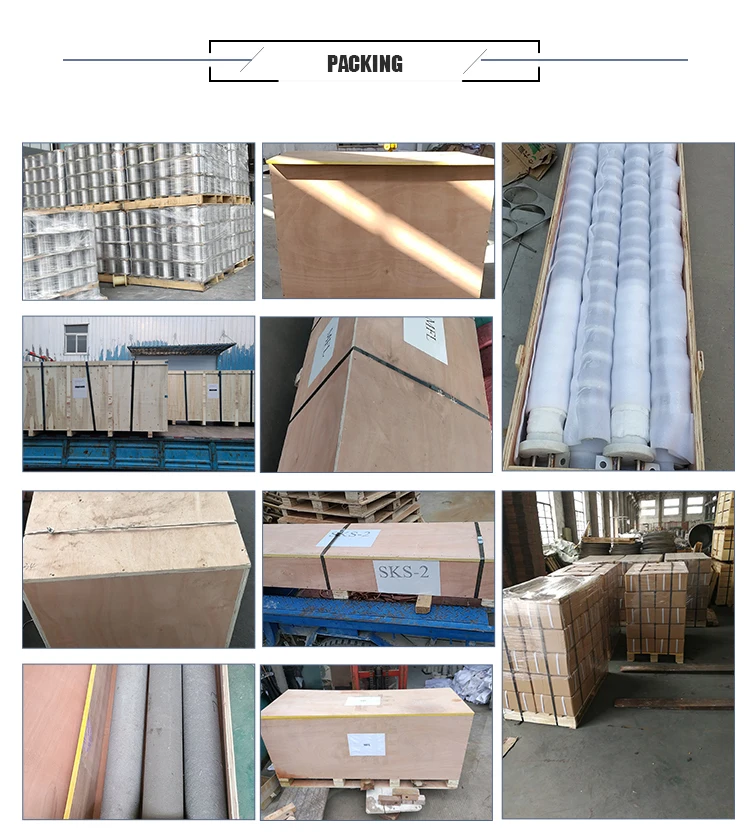

We're professional resistance wire manufacturers and suppliers in China, specialized in providing high quality customized products. We warmly welcome you to wholesale high-grade resistance wire made in China here from our factory.
(0/10)


