

How to improve the toughness of special metals welding joints?
Aug 27, 2025
In the specialized field of special metals welding, enhancing the toughness of welding joints is a critical aspect that directly impacts the performance and durability of the final products. As a dedicated special metals welding supplier, I've witnessed firsthand the challenges and opportunities in this area. This blog aims to share some effective strategies and insights on how to improve the toughness of special metals welding joints.
Understanding the Basics of Special Metals Welding Joint Toughness
Before delving into the improvement methods, it's essential to understand what toughness means in the context of special metals welding joints. Toughness refers to the ability of a material to absorb energy and deform plastically before fracturing. In welding joints, high toughness is crucial as it ensures the joint can withstand various stresses, such as impact, fatigue, and thermal cycling, without failing prematurely.
The toughness of a welding joint is influenced by several factors, including the base metal properties, filler metal selection, welding process parameters, and post - welding heat treatment. Each of these factors plays a significant role in determining the final toughness of the joint.
Selecting the Right Filler Metals
One of the most fundamental steps in improving the toughness of special metals welding joints is the proper selection of filler metals. Different filler metals have different chemical compositions and mechanical properties, which can significantly affect the joint's toughness.
For example, when welding Aisi 347 Stainless Steel, choosing a filler metal with a compatible composition is crucial. Aisi 347 stainless steel contains niobium, which helps to stabilize the structure and prevent intergranular corrosion. A filler metal with a similar niobium content can enhance the joint's toughness and corrosion resistance.
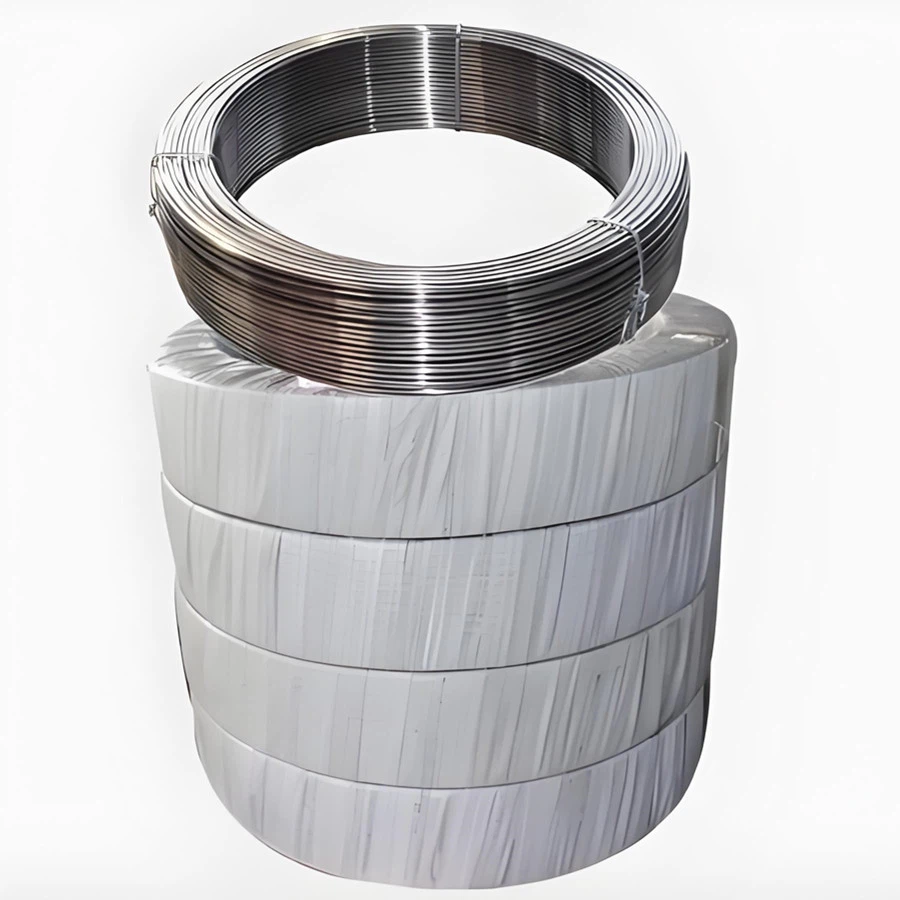
Another example is the use of Er310 Welding Wire. This welding wire is known for its high chromium and nickel content, which provides excellent oxidation resistance and high - temperature strength. When used in the appropriate applications, it can improve the toughness of the welding joint, especially in high - temperature environments.

Optimizing Welding Process Parameters
The welding process parameters, such as welding current, voltage, welding speed, and shielding gas, also have a profound impact on the toughness of the welding joint.
Welding current and voltage affect the heat input during the welding process. Excessive heat input can lead to grain growth in the weld metal and heat - affected zone (HAZ), which reduces the joint's toughness. On the other hand, insufficient heat input may result in incomplete fusion and porosity, also compromising the joint's quality. Therefore, it's essential to find the optimal balance of welding current and voltage for each specific welding application.
Welding speed is another critical parameter. A slower welding speed allows more time for the molten metal to solidify and for the heat to dissipate, which can promote the formation of a fine - grained structure and improve the joint's toughness. However, too slow a welding speed can increase the heat input and cause other problems.
Shielding gas plays a vital role in protecting the weld pool from oxidation and contamination. Different shielding gases have different effects on the welding process and the joint's properties. For example, argon - based shielding gases are commonly used for welding stainless steels as they provide good protection and help to produce a clean weld.
Controlling the Heat - Affected Zone (HAZ)
The heat - affected zone (HAZ) is an area adjacent to the weld where the base metal has been heated to a high temperature but not melted. The properties of the HAZ can significantly affect the toughness of the welding joint.
To control the HAZ, pre - heating and post - welding heat treatment can be employed. Pre - heating the base metal before welding can reduce the cooling rate in the HAZ, which helps to prevent the formation of hard and brittle microstructures. Post - welding heat treatment, such as annealing or stress relieving, can also improve the toughness of the HAZ by reducing residual stresses and promoting the formation of a more uniform microstructure.
Using Stainless Steel Wire 1.6mm Effectively
Stainless steel wire, such as Stainless Steel Wire 1.6mm, is a commonly used filler metal in special metals welding. Its diameter and quality can affect the welding process and the joint's toughness.
A 1.6mm diameter stainless steel wire provides a good balance between deposition rate and control. It can be used in various welding processes, such as gas metal arc welding (GMAW) and flux - cored arc welding (FCAW). When using this wire, it's important to ensure proper wire feeding and arc stability to achieve a high - quality weld.
Quality Control and Inspection
Quality control and inspection are essential steps in ensuring the toughness of special metals welding joints. Non - destructive testing (NDT) methods, such as ultrasonic testing (UT), radiographic testing (RT), and magnetic particle testing (MT), can be used to detect internal and surface defects in the welding joint.
Destructive testing, such as tensile testing, impact testing, and hardness testing, can also be performed to evaluate the mechanical properties of the joint, including its toughness. By regularly inspecting and testing the welding joints, any potential problems can be identified and corrected in a timely manner.
Conclusion
Improving the toughness of special metals welding joints is a complex but achievable goal. By selecting the right filler metals, optimizing welding process parameters, controlling the heat - affected zone, using appropriate welding wires, and implementing strict quality control and inspection procedures, we can produce high - quality welding joints with excellent toughness.
As a special metals welding supplier, I'm committed to providing our customers with the best products and technical support to help them achieve optimal welding results. If you're interested in our products or have any questions about special metals welding, please feel free to contact us for further discussion and procurement opportunities.
References
- AWS Welding Handbook, American Welding Society
- Welding Metallurgy, John C. Lippold and David K. Miller
- Stainless Steel: Properties and Applications, ASM International