

What is the hardness of Inconel alloy?
Aug 01, 2025
What is the hardness of Inconel alloy?
As a seasoned supplier of Inconel alloys, I've witnessed firsthand the growing demand for these remarkable materials across various industries. Inconel alloys are a family of high - performance nickel - chromium - based superalloys known for their exceptional resistance to corrosion, oxidation, and high - temperature strength. One of the critical properties that often comes under scrutiny is the hardness of Inconel alloys. In this blog, we'll delve deep into what hardness means for Inconel alloys, how it's measured, and how it varies across different types of Inconel.
Understanding Hardness
Hardness is a fundamental material property that describes a material's resistance to localized deformation, such as indentation, scratching, or abrasion. In the context of Inconel alloys, hardness plays a crucial role in determining their suitability for specific applications. For instance, in aerospace components where parts are subject to high - stress conditions and wear, a higher hardness can enhance the durability and performance of the parts.
There are several methods to measure the hardness of materials, and each has its own advantages and limitations. The most commonly used hardness testing methods for Inconel alloys include the Rockwell, Brinell, and Vickers hardness tests.
The Rockwell hardness test is a rapid and widely used method. It measures the depth of penetration of an indenter under a specific load. The Rockwell scale uses different indenters and loads depending on the material's hardness range. For Inconel alloys, the Rockwell C scale (HRC) is often used for harder materials, while the Rockwell B scale (HRB) may be used for softer forms or in cases where the material has a lower hardness.
The Brinell hardness test involves pressing a hard steel or carbide ball into the material under a known load. The diameter of the indentation left on the material's surface is measured, and the Brinell hardness number (BHN) is calculated. This test is suitable for materials with a relatively large grain size and can provide an average hardness value over a larger area.
The Vickers hardness test uses a diamond indenter in the shape of a square - based pyramid. The indenter is pressed into the material under a specified load, and the diagonal lengths of the indentation are measured. The Vickers hardness number (HV) is then calculated. This test is highly accurate and can be used for a wide range of materials, including Inconel alloys. It is particularly useful for testing small or thin samples and for materials with a fine - grained structure.
Hardness of Different Inconel Alloys
Inconel alloys come in various grades, each with its own unique chemical composition and properties, which in turn affect their hardness.
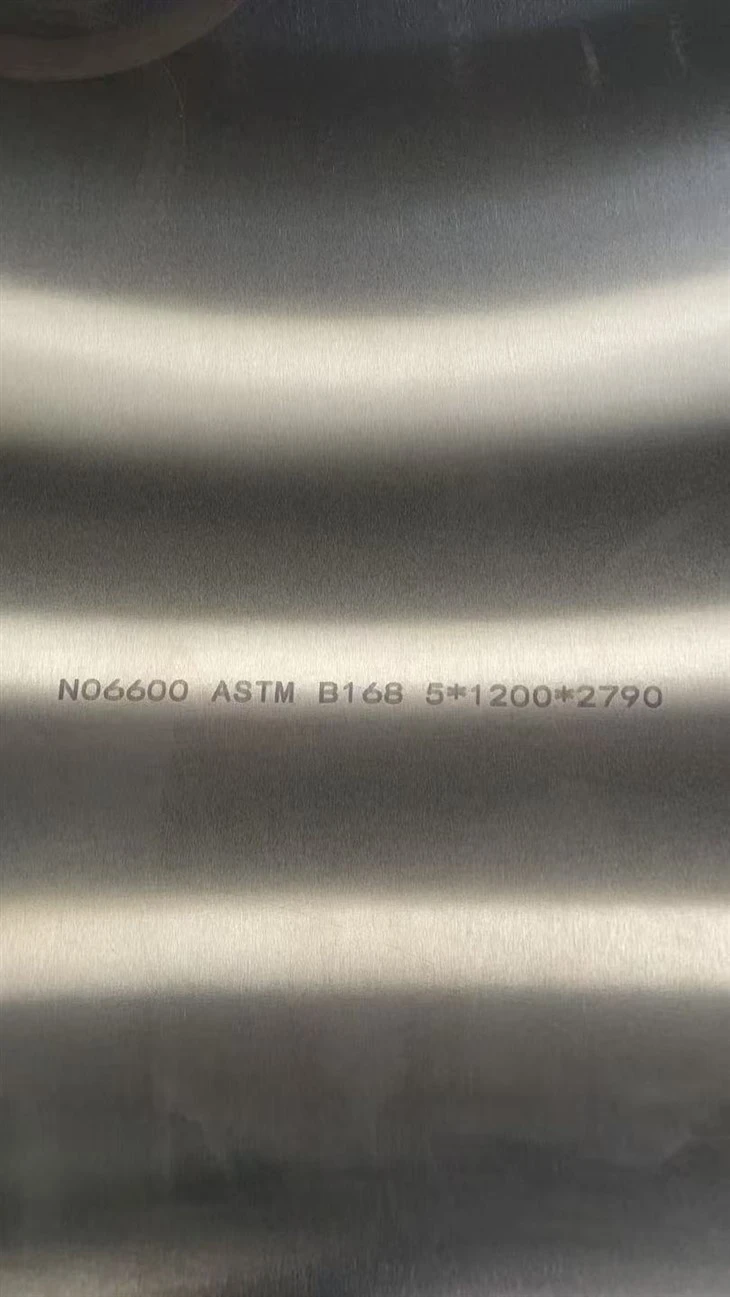

Let's start with UNS N06600. UNS N06600 is a widely used Inconel alloy with excellent corrosion resistance and high - temperature strength. In its annealed condition, the hardness of UNS N06600 typically ranges from around 80 - 95 HRB on the Rockwell B scale. However, through heat treatment processes such as cold working and precipitation hardening, the hardness can be significantly increased. Cold working involves deforming the material at room temperature, which causes the grains to become distorted and increases the material's hardness. Precipitation hardening is a heat - treatment process where fine particles are precipitated within the alloy matrix, strengthening the material and increasing its hardness. After appropriate heat treatment, the hardness of UNS N06600 can reach values up to around 30 - 35 HRC on the Rockwell C scale.
2.4856 Inconel 625 is another popular Inconel alloy. It contains significant amounts of chromium, molybdenum, and niobium, which contribute to its outstanding corrosion resistance and high - temperature strength. In the annealed state, Inconel 625 has a hardness of approximately 137 - 220 HB (Brinell hardness). Similar to UNS N06600, cold working and heat treatment can be used to increase its hardness. After cold working and proper heat treatment, the hardness of Inconel 625 can reach values in the range of 25 - 35 HRC.
Alloy X 750 is a precipitation - hardenable nickel - chromium alloy. In its solution - annealed condition, the hardness of Alloy X 750 is relatively low, typically around 80 - 90 HRB. However, after precipitation hardening heat treatment, which involves a series of heating and cooling cycles to form strengthening precipitates, the hardness can increase significantly. The hardness of precipitation - hardened Alloy X 750 can reach values up to around 38 - 42 HRC, making it suitable for applications where high strength and hardness are required, such as in gas turbine components.
Factors Affecting the Hardness of Inconel Alloys
The hardness of Inconel alloys is influenced by several factors, including their chemical composition, heat treatment, and cold working.
The chemical composition of an Inconel alloy plays a crucial role in determining its hardness. Elements such as chromium, molybdenum, and niobium increase the alloy's strength and hardness by forming solid solutions and intermetallic compounds within the alloy matrix. For example, in Inconel 625, the presence of molybdenum and niobium contributes to its high - temperature strength and hardness.
Heat treatment is a powerful tool for controlling the hardness of Inconel alloys. Annealing is a heat - treatment process that involves heating the alloy to a specific temperature and then slowly cooling it. This process relieves internal stresses and can soften the material. On the other hand, precipitation hardening heat treatment can significantly increase the hardness by forming fine precipitates within the alloy. The specific heat - treatment parameters, such as the heating temperature, holding time, and cooling rate, need to be carefully controlled to achieve the desired hardness and mechanical properties.
Cold working is another method to increase the hardness of Inconel alloys. When the alloy is deformed at room temperature, the dislocations within the crystal structure become tangled, which restricts their movement and increases the material's hardness. However, excessive cold working can lead to a loss of ductility, and the material may become brittle. Therefore, a balance needs to be struck between increasing hardness and maintaining the alloy's other mechanical properties.
Applications Based on Hardness
The hardness of Inconel alloys makes them suitable for a wide range of applications. In the aerospace industry, Inconel alloys with high hardness are used in turbine blades, engine components, and structural parts. The high - temperature strength and hardness of these alloys allow them to withstand the extreme conditions of jet engines, including high temperatures, high pressures, and corrosive environments.
In the chemical processing industry, Inconel alloys with appropriate hardness are used in reactors, heat exchangers, and piping systems. Their corrosion resistance and hardness ensure long - term durability in the presence of aggressive chemicals.
In the oil and gas industry, Inconel alloys are used in downhole tools, valves, and wellhead equipment. The hardness of these alloys helps them resist wear and corrosion in harsh drilling and production environments.
Contact for Procurement
If you're in need of Inconel alloys for your specific applications, whether you require a particular hardness level or other specific properties, we're here to assist you. As a trusted Inconel alloy supplier, we have a wide range of Inconel alloys in stock and can provide customized solutions to meet your exact requirements. Contact us to start a procurement discussion and find the perfect Inconel alloy for your project.
References
-ASM Handbook Volume 3: Alloy Phase Diagrams. ASM International.
-Lawrence, J. F. (2007). Nickel and High - Nickel Alloys. ASM International.
-Schutz, R. A. (2010). Superalloys: A Technical Guide. ASM International.