

What is the role of alloying elements in a heating alloy strip?
Sep 17, 2025
Hey there! As a heating alloy strip supplier, I've been getting a lot of questions lately about the role of alloying elements in these strips. So, I thought I'd take a deep dive into this topic and share what I've learned over the years.
First off, let's talk about what heating alloy strips are. These are basically strips made from alloys that are designed to generate heat when an electric current passes through them. They're used in a wide range of applications, from household appliances like toasters and hair dryers to industrial equipment such as furnaces and ovens.
Now, the performance of a heating alloy strip depends a great deal on the alloying elements it contains. Different elements bring different properties to the table, and understanding these can help you choose the right strip for your specific needs.
Chromium (Cr)
One of the most common alloying elements in heating alloy strips is chromium. Chromium is a real workhorse when it comes to enhancing the properties of these strips.
First of all, chromium helps to improve the oxidation resistance of the alloy. When a heating alloy strip is in use, it's constantly exposed to high temperatures and oxygen in the air. Over time, this can cause the strip to oxidize, which can reduce its performance and lifespan. But when chromium is added to the alloy, it forms a thin, protective oxide layer on the surface of the strip. This layer acts as a barrier, preventing oxygen from reaching the underlying metal and slowing down the oxidation process.
Another important role of chromium is to increase the electrical resistivity of the alloy. Electrical resistivity is a measure of how much a material resists the flow of electric current. A higher resistivity means that the strip will generate more heat when an electric current passes through it. This is crucial for heating applications, as it allows the strip to convert electrical energy into heat more efficiently.
For example, in alloys like Cr15Al5, chromium plays a key role in both oxidation resistance and electrical resistivity. The 15% chromium content helps to form a stable oxide layer and provides a good balance of resistivity for efficient heating.
Aluminum (Al)
Aluminum is another important alloying element in heating alloy strips. Like chromium, aluminum also contributes to the oxidation resistance of the alloy.
When aluminum is present in the alloy, it reacts with oxygen at high temperatures to form aluminum oxide. This oxide layer is very stable and adherent, and it provides excellent protection against further oxidation. In fact, aluminum oxide is even more protective than the chromium oxide layer in some cases.
In addition to oxidation resistance, aluminum can also affect the mechanical properties of the alloy. It can make the alloy more brittle at room temperature, but at high temperatures, it can improve the ductility and formability of the strip. This is important for manufacturing processes, as it allows the strip to be easily shaped into the desired form.
In alloys such as 1Cr13Al4, the 4% aluminum content helps to enhance the oxidation resistance and also contributes to the overall performance of the strip.
Niobium (Nb)
Niobium is a less common but still important alloying element in some heating alloy strips. Niobium can improve the high - temperature strength and creep resistance of the alloy.
Creep is a phenomenon where a material slowly deforms over time under a constant load at high temperatures. This can be a major problem for heating alloy strips, as they're often subjected to both high temperatures and mechanical stresses during use. By adding niobium to the alloy, the formation of fine, stable carbide particles can be promoted. These particles act as pinning points, preventing the movement of dislocations in the metal lattice and reducing the creep rate.
For example, in 0Cr21Al6Nb, the addition of niobium helps to improve the high - temperature performance of the alloy, making it suitable for applications where the strip will be exposed to extreme conditions for long periods of time.
Other Elements
There are also other elements that can be added to heating alloy strips in smaller amounts. For example, silicon (Si) can further enhance the oxidation resistance of the alloy by promoting the formation of a more protective oxide layer. Manganese (Mn) can help to improve the hot - working properties of the alloy, making it easier to process during manufacturing.
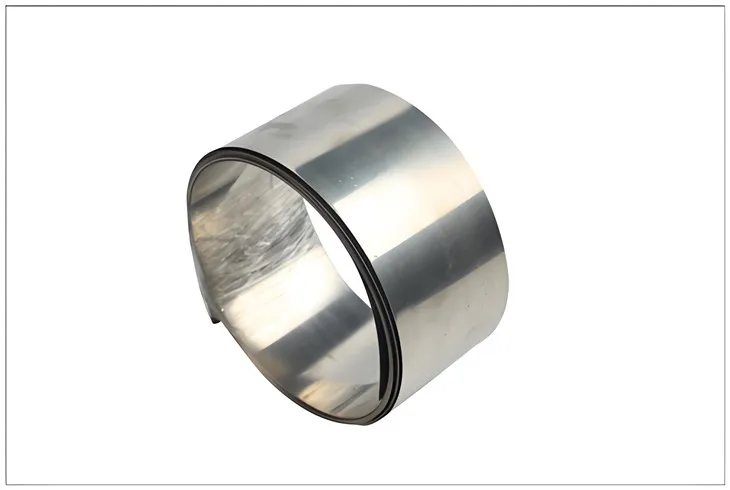

Choosing the Right Alloy
When it comes to choosing the right heating alloy strip for your application, it's important to consider the specific requirements of your project. If you need a strip that will be used in a high - temperature, oxidizing environment, an alloy with a high chromium and aluminum content like Cr15Al5 or 1Cr13Al4 might be a good choice. On the other hand, if you're dealing with extreme high - temperature and long - term stress conditions, an alloy like 0Cr21Al6Nb with niobium addition could be more suitable.
As a heating alloy strip supplier, I've seen firsthand how the right choice of alloy can make a big difference in the performance and reliability of heating applications. That's why I'm always happy to help customers understand the different alloying elements and their roles, so they can make an informed decision.
If you're in the market for heating alloy strips, or if you have any questions about the role of alloying elements or which alloy is right for your project, don't hesitate to reach out. I'm here to assist you with all your heating alloy strip needs and help you find the perfect solution for your application.
References
- ASM Handbook Volume 2: Properties and Selection: Nonferrous Alloys and Special - Purpose Materials.
- Metals Handbook: Properties and Selection: Iron and Steels, 9th Edition.
- Technical literature from major alloy manufacturers.