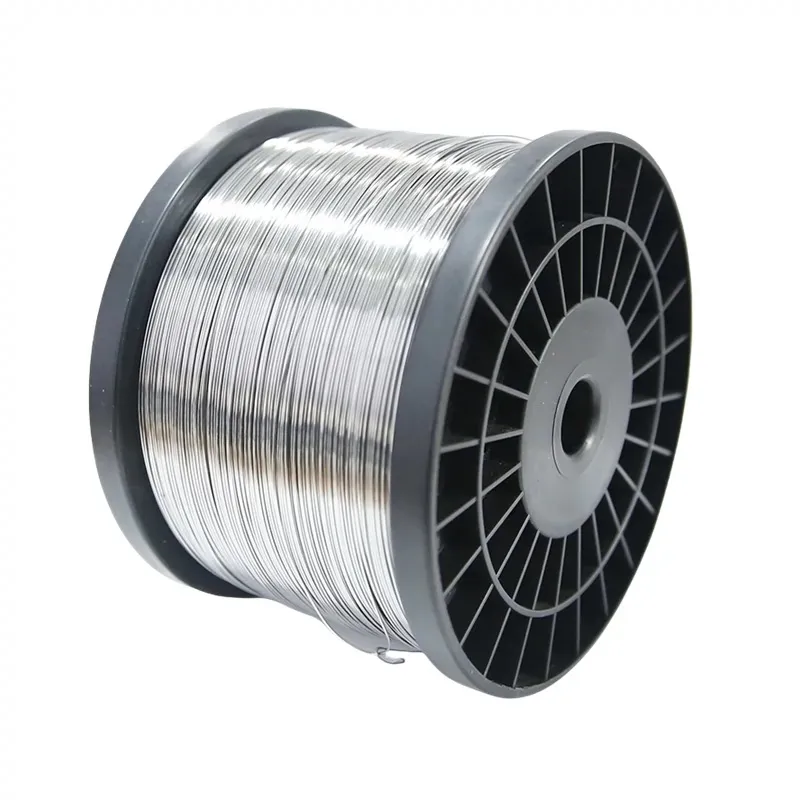
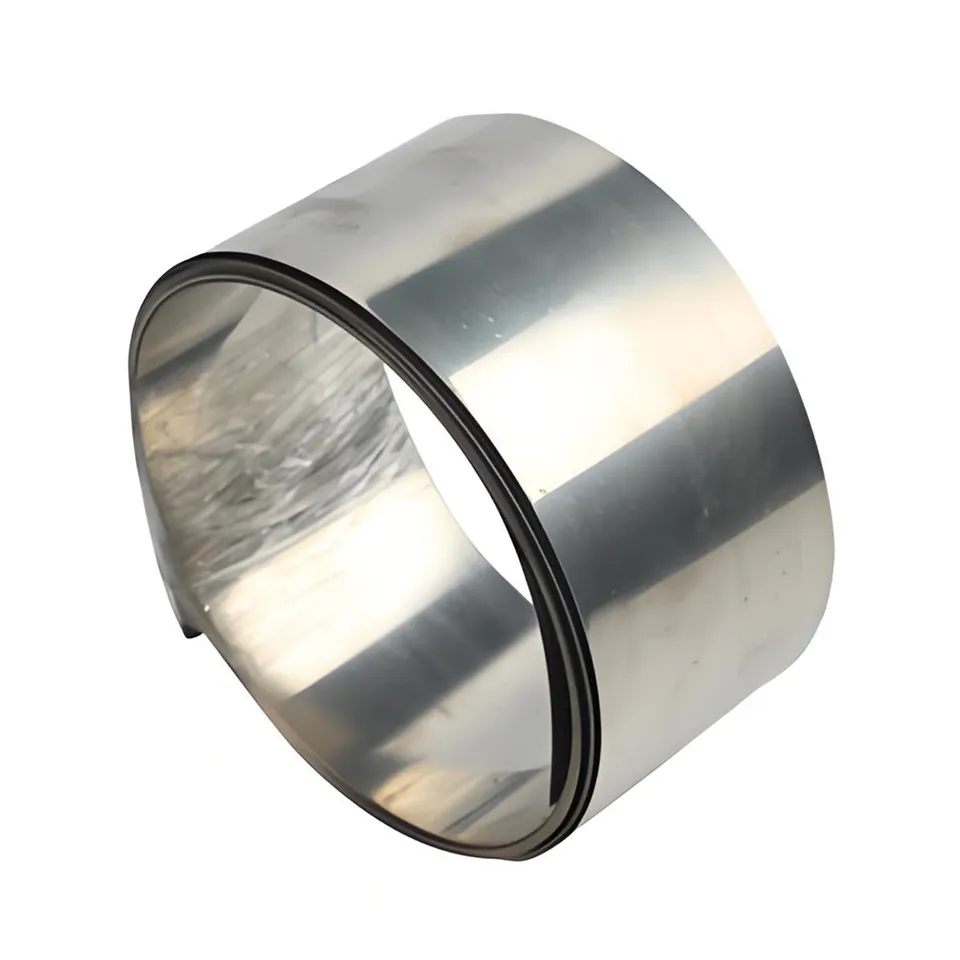
310S Vs 314 Vs 330 Heat-Resistant Steel: A Comprehensive Comparison Guide
Aug 01, 2026

Introduction
When selecting heat-resistant austenitic stainless steels for high-temperature industrial applications, engineers often face a critical decision among three closely related but distinctly different grades: 310S, 314, and 330. All three belong to the austenitic family and share a chromium-nickel foundation, yet each was engineered with a specific performance priority in mind. 310S offers an excellent balance of oxidation resistance and cost; 314 adds elevated silicon for superior scaling resistance; and 330 raises nickel to 34–37% for unmatched carburization and thermal-shock resistance. Understanding the metallurgical differences, mechanical trade-offs, and application-specific advantages of each grade is essential for making the right material selection in furnace, heat-treatment, and petrochemical environments where premature failure carries significant safety and economic consequences.
Grade Overview
310S (UNS S31008 / EN 1.4845)
310S is a low-carbon variant of the standard 310 grade, with carbon content capped at 0.08%. Its 24–26% chromium and 19–22% nickel composition delivers excellent oxidation resistance up to approximately 1150°C in continuous service and 1200°C in intermittent operation. The reduced carbon content minimizes carbide precipitation in the heat-affected zone during welding, improving intergranular corrosion resistance. 310S is the most widely used and cost-effective of the three grades, commonly found in furnace components, heat exchangers, and burner parts. Its density is 8.0 g/cm³, with a melting range of 1400–1450°C.
314 (UNS S31400)
314 shares a similar chromium-nickel base with 310S (23–26% Cr, 19–22% Ni) but distinguishes itself with a significantly higher silicon content of 1.50–3.00%, compared to 310S's ≤1.50%. This elevated silicon promotes the formation of a denser, more adherent chromia-silica composite oxide scale, enhancing oxidation and scaling resistance at extreme temperatures. 314 also permits a higher carbon content (up to 0.25%), which can improve high-temperature creep strength but reduces weldability compared to 310S. It is primarily specified for severe high-temperature oxidizing atmospheres where scale spallation is a concern.
330 (UNS N08330 / RA330 / EN 1.4886)
330 takes a fundamentally different approach by raising nickel to 34–37% while keeping chromium at 17–20% and silicon at 0.75–1.50%. This high-nickel, moderate-chromium chemistry makes 330 the benchmark grade for carburizing and nitriding atmospheres. It offers outstanding resistance to thermal shock and thermal fatigue due to its stable single-phase austenitic structure and moderate thermal expansion coefficient (approximately 16.6 × 10⁻⁶/°C at 0–100°C). The melting range is 1340–1395°C, and it maintains useful mechanical strength at temperatures up to 1150°C. 330 is the preferred material for carburizing furnace components, muffle furnaces, radiant tubes, and retorts.
Chemical Composition Comparison
| Element | 310S (UNS S31008) | 314 (UNS S31400) | 330 (UNS N08330) |
|---|---|---|---|
| Carbon (C) | ≤0.08 | ≤0.25 | ≤0.08 |
| Chromium (Cr) | 24.00–26.00 | 23.00–26.00 | 17.00–20.00 |
| Nickel (Ni) | 19.00–22.00 | 19.00–22.00 | 34.00–37.00 |
| Silicon (Si) | ≤1.50 | 1.50–3.00 | 0.75–1.50 |
| Manganese (Mn) | ≤2.00 | ≤2.00 | ≤2.00 |
| Phosphorus (P) | ≤0.045 | ≤0.045 | ≤0.03 |
| Sulfur (S) | ≤0.030 | ≤0.030 | ≤0.03 |
| Iron (Fe) | Balance | Balance | Balance (~42%) |
Mechanical Properties Comparison
| Property | 310S | 314 | 330 |
|---|---|---|---|
| Tensile Strength (MPa) | ≥515 | ≥515 | ≥483 |
| Yield Strength (MPa) | ≥205 | ≥205 | ≥207 |
| Elongation (%) | ≥40 | ≥40 | ≥30 |
| Density (g/cm³) | 8.0 | 8.0 | 8.0 |
| Max Continuous Service Temp (°C) | ~1150 | ~1150 | ~1040 |
| Max Intermittent Service Temp (°C) | ~1200 | ~1200 | ~1150 |
Performance Analysis
Oxidation Resistance: All three grades form a protective chromium-oxide (Cr₂O₃) layer at elevated temperatures. 314 has the edge in pure oxidizing atmospheres because its higher silicon content (up to 3%) promotes a more adherent composite oxide scale that resists spallation during thermal cycling. 310S provides excellent oxidation resistance up to 1150°C continuous and is sufficient for most furnace applications. 330's oxidation resistance is good up to approximately 1040°C continuous, slightly lower than 310S and 314 in pure air, but it excels where the atmosphere is not purely oxidizing.
Carburization Resistance: This is where 330 clearly outperforms the other two. In carburizing atmospheres (endothermic gas, methane-rich environments), carbon can penetrate the steel surface, form chromium carbides, and cause embrittlement and metal dusting. 330's 34–37% nickel content stabilizes the austenitic matrix and significantly reduces carbon solubility and diffusion rates. The silicon addition further enhances the surface oxide film's barrier properties. In carburizing furnace environments at 900–1100°C, 330 can last several times longer than 310S before significant carburization damage occurs.
Thermal Shock and Thermal Fatigue: 330 is the superior choice for applications involving rapid temperature changes. Its high nickel content maintains a single-phase austenitic structure that resists sigma-phase embrittlement, and its moderate thermal expansion coefficient reduces thermal stress buildup. This makes it ideal for quench fixtures, radiant tubes, and components subjected to frequent heating-cooling cycles.
Creep Strength: At temperatures above 900°C, 314's higher carbon allowance can provide marginally better creep strength compared to the low-carbon 310S. However, 310S remains adequate for most structural furnace applications. All three grades rely on their austenitic structure for good creep properties, but none is designed for load-bearing applications above 1150°C, where nickel-base superalloys become necessary.
Weldability: 310S offers the best weldability of the three due to its low carbon content, which minimizes sensitization in the heat-affected zone. 314 is more challenging to weld because of its higher carbon and silicon content, often requiring careful filler metal selection and preheating. 330 welds well using matching or nickel-base filler metals (such as AWS ERNiCr-3) and typically does not require post-weld heat treatment.
Application Guide
| Application Environment | Recommended Grade | Rationale |
|---|---|---|
| General furnace parts, heat exchangers (oxidizing, ≤1100°C) | 310S | Cost-effective, good oxidation resistance, excellent weldability |
| Severe oxidizing atmospheres, scale-prone (>1100°C) | 314 | High silicon enhances scale adhesion and spallation resistance |
| Carburizing/nitriding furnaces (900–1100°C) | 330 | 34–37% Ni resists carbon penetration and metal dusting |
| Thermal cycling/quench fixtures | 330 | Superior thermal fatigue resistance, stable austenite |
| Petrochemical reformer tubes | 310S / 330 | 310S for oxidizing zones; 330 for carburizing zones |
| Burner nozzles, combustion chambers | 310S | Adequate oxidation resistance at moderate cost |
| Muffle furnaces, retorts | 330 | Long service life in complex mixed atmospheres |
FAQ
What is the main difference between 310S and 314?
The primary difference is silicon content. 310S has a maximum of 1.50% silicon, while 314 contains 1.50–3.00% silicon. This higher silicon gives 314 superior oxidation and scaling resistance at extreme temperatures but reduces weldability due to its higher permissible carbon content (up to 0.25% vs. 0.08% for 310S).
Why is 330 stainless steel more expensive than 310S?
330 contains 34–37% nickel, nearly double the 19–22% found in 310S. Since nickel is the most expensive major alloying element in these grades, the higher nickel content significantly increases raw material cost. However, 330's extended service life in carburizing environments can offset the initial cost premium.
Can 310S be used in carburizing furnace environments?
310S can be used in carburizing atmospheres, but its service life will be significantly shorter than 330. Over prolonged exposure to carbon-rich atmospheres at 900–1100°C, 310S is susceptible to carburization, chromium carbide precipitation, and eventual metal dusting. For long-term service in such environments, 330 is strongly recommended.
What filler metal should be used for welding 330 stainless steel?
For welding 330 (UNS N08330), AWS ERNiCr-3 (Inconel 82) or matching ER330 filler is recommended. GTAW, SMAW, and GMAW processes are all suitable. Post-weld heat treatment is generally not required, but interpass temperature should be controlled to prevent hot cracking.
Which grade is best for thermal shock resistance?
330 offers the best thermal shock resistance among the three grades. Its high nickel content ensures a stable single-phase austenitic structure with moderate thermal expansion, allowing it to withstand repeated rapid heating and cooling cycles without cracking.
Conclusion
Selecting the right heat-resistant stainless steel grade depends on the specific service environment. For general high-temperature oxidizing applications up to 1150°C, 310S provides an excellent balance of performance and cost. When severe scaling and spallation are concerns at extreme temperatures, 314's elevated silicon content delivers superior oxide-scale adhesion. For carburizing, nitriding, or thermally cycling environments, 330's 34–37% nickel content offers unmatched protection against carbon penetration and thermal fatigue. By matching the grade to the application atmosphere and temperature profile, engineers can maximize component service life and minimize costly unscheduled shutdowns.