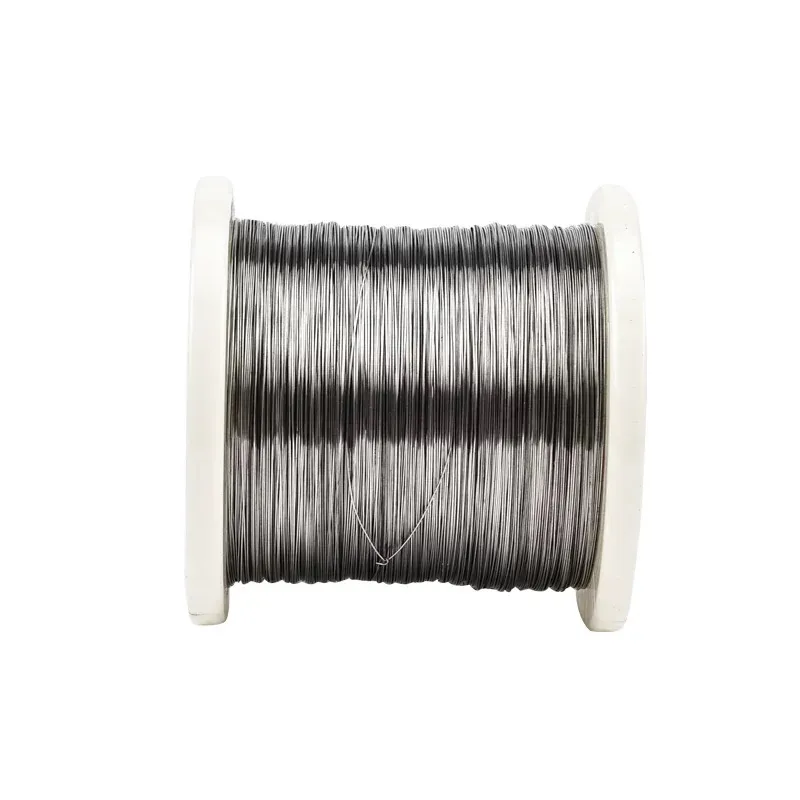
310S Vs 314 Vs 330: Which Heat-Resistant Steel Is Right For Your Application?
Sep 04, 2026

Introduction
When selecting heat-resistant stainless steels for demanding high-temperature environments, engineers often compare three austenitic grades: 310S, 314, and 330. Each of these chromium-nickel alloys offers distinct advantages in oxidation resistance, carburization resistance, and thermal cycling performance. Understanding their differences in chemical composition, mechanical properties, and maximum service temperatures is critical for optimizing furnace design, petrochemical equipment, and heat treatment systems. This comprehensive comparison will help you choose the right grade for your specific operating conditions, balancing performance with cost-effectiveness.
310S (UNS S31008): The General-Purpose Heat-Resistant Workhorse
AISI 310S is a low-carbon variant of 310 stainless steel, with carbon content controlled to ≤0.08% to minimize carbide precipitation in welded structures. With 24–26% chromium and 19–22% nickel, 310S delivers excellent oxidation resistance up to 1150°C in continuous service and 1040°C in intermittent operation. It offers good resistance to sulfidation and mildly carburizing atmospheres, making it the most widely used heat-resistant steel for general-purpose furnace applications. Its balanced composition provides solid mechanical properties - tensile strength ≥520 MPa and elongation ≥40% - at a competitive price point, making it the go-to choice for cost-sensitive projects.
314 (UNS S31400): The Silicon-Enhanced Carburization Fighter
AISI 314 is essentially a high-silicon version of the 310 family, with silicon content elevated to 1.50–3.00% (compared to ≤1.50% in 310S). This elevated silicon is the key differentiator: it significantly improves the alloy's resistance to carburization and high-temperature oxidation by forming a stable silica-rich sublayer beneath the chromia scale. 314 has the highest heat-resisting properties of any standard chromium-nickel stainless steel, with a maximum service temperature reaching 1200°C. The higher carbon allowance (≤0.25%) also provides greater creep strength at elevated temperatures. 314 is the preferred choice when environments involve severely carburizing atmospheres, such as industrial heat-treating furnaces and radiant tubes.
330 (UNS N08330): The Ultra-High-Nickel Anti-Carburization Specialist
AISI 330 stands apart with its exceptional 34–37% nickel content - nearly double that of 310S and 314. This ultra-high nickel, combined with 17–20% chromium and 0.75–1.50% silicon, delivers outstanding resistance to carburization, thermal shock, and nitrogen absorption. 330 excels in severely carburizing and thermally cycling environments up to 1150°C (2200°F). Its high nickel also provides superior resistance to chloride stress corrosion cracking and sigma-phase embrittlement. While more expensive due to its nickel content, 330 fills the gap between standard heat-resistant steels and costly nickel-base superalloys, offering unmatched performance in the most demanding furnace atmospheres.
Chemical Composition Comparison
| Element (%) | 310S (S31008) | 314 (S31400) | 330 (N08330) |
|---|---|---|---|
| C (Carbon) | ≤0.08 | ≤0.25 | ≤0.08 |
| Cr (Chromium) | 24.0–26.0 | 23.0–26.0 | 17.0–20.0 |
| Ni (Nickel) | 19.0–22.0 | 19.0–22.0 | 34.0–37.0 |
| Si (Silicon) | ≤1.50 | 1.50–3.00 | 0.75–1.50 |
| Mn (Manganese) | ≤2.00 | ≤2.00 | ≤2.00 |
| P (Phosphorus) | ≤0.045 | ≤0.045 | ≤0.030 |
| S (Sulfur) | ≤0.030 | ≤0.030 | ≤0.030 |
Mechanical & Physical Properties Comparison
| Property | 310S | 314 | 330 |
|---|---|---|---|
| Tensile Strength (MPa) | ≥520 | ≥520 | ≥550 |
| Yield Strength (MPa) | ≥205 | ≥205 | ≥210 |
| Elongation (%) | ≥40 | ≥40 | ≥40 |
| Hardness (HBW, max) | ≤187 | ≤187 | ≤217 |
| Density (g/cm³) | 7.98 | 7.80 | 7.89 |
| Max Continuous Temp (°C) | 1150 | 1200 | 1150 |
| Max Intermittent Temp (°C) | 1040 | 1050 | 1035 |
| Thermal Conductivity (W/m·K, 100°C) | 14.2 | 17.5 | 12.7 |
Performance Analysis
Oxidation Resistance: All three grades form protective chromium oxide (Cr2O3) films that provide excellent oxidation resistance. 314's higher silicon content promotes the formation of a stable silica-rich sublayer beneath the chromia scale, giving it the edge in oxidizing atmospheres above 1100°C. 330's ultra-high nickel content provides additional protection through nickel oxide formation, but its lower chromium (17–20% vs 24–26%) means slightly less protection in strongly oxidizing conditions compared to 310S and 314.
Carburization Resistance: This is where the three grades differ most significantly. 330 is the clear winner in carburizing atmospheres - its 34–37% nickel content dramatically reduces carbon diffusion into the alloy, while its silicon content forms a protective silicon oxide barrier. 314 ranks second, with its elevated silicon (up to 3%) providing better carburization resistance than 310S. 310S offers adequate resistance in mildly carburizing environments but is not recommended for severely carburizing conditions where carbon pickup would compromise structural integrity.
Thermal Cycling and Thermal Shock: 330 excels in thermal cycling applications due to its low coefficient of thermal expansion and high ductility. Its ability to withstand repeated heating and cooling up to 1035°C without cracking makes it ideal for batch-type heat treatment furnaces. 314 and 310S offer good thermal fatigue resistance but are more susceptible to thermal shock damage in severe cyclic conditions, particularly when temperature differentials exceed 500°C.
Cost Considerations: 310S is the most economical option, widely available in all product forms (plate, sheet, bar, tube, pipe). 314 commands a moderate premium for its silicon-enhanced composition but offers excellent value in carburizing environments. 330 is the most expensive due to its high nickel content (nickel being a costly alloying element), but its superior performance in extreme environments often justifies the investment through extended service life and reduced maintenance downtime.
Application Guide
- 310S: Ideal for general-purpose high-temperature applications including furnace components, heat exchangers, burner parts, and petrochemical equipment operating in mildly oxidizing atmospheres up to 1150°C. Best choice when cost is a primary concern and carburization is not severe. Common in boiler fixtures, muffles, and conveyor belts.
- 314: Recommended for industrial heat-treating furnaces, carburizing atmosphere components, and applications requiring maximum oxidation resistance above 1100°C. Preferred for furnace tubes, radiant tubes, and burner components in moderately to severely carburizing environments where 310S would suffer excessive carbon pickup.
- 330: The optimal choice for severely carburizing atmospheres, thermal cycling applications, and environments with nitrogen absorption concerns. Widely used in heat-treat furnace containers, fans, and fixtures; petrochemical furnace parts; cracked ammonia components; and salt pots. Its unmatched thermal shock resistance makes it indispensable for batch furnaces with frequent heating/cooling cycles.
FAQ
Q1: Can 310S be used as a direct replacement for 314?
In many general high-temperature applications, 310S can substitute for 314. However, in severely carburizing atmospheres, 314's higher silicon content (1.50–3.00%) provides significantly better performance. Always evaluate the specific atmosphere composition and temperature before substituting.
Q2: Why is 330 significantly more expensive than 310S and 314?
330 contains 34–37% nickel - nearly double the nickel content of 310S and 314. Since nickel is a costly alloying element, this dramatically increases the material cost. However, 330's extended service life in extreme environments often offsets the higher initial investment through reduced replacement frequency.
Q3: Which grade is best for thermal cycling applications?
330 is the preferred choice for thermal cycling due to its low thermal expansion coefficient and superior resistance to thermal fatigue. Its high ductility allows it to withstand repeated heating and cooling without cracking, making it ideal for batch-type heat treatment furnaces.
Q4: Are these grades weldable?
All three grades are austenitic and generally considered weldable. 310S can be welded with AWS E310-15 electrodes or ER310 filler wire. 314 requires similar matching filler metals. 330 should be welded with matching high-nickel filler metals such as ENiCrFe-3, with controlled heat input to avoid hot cracking.
Q5: What is the maximum recommended service temperature for each grade?
310S: 1150°C continuous, 1040°C intermittent. 314: 1200°C continuous, 1050°C intermittent. 330: 1150°C continuous, 1035°C intermittent (repeated thermal cycling). Actual limits depend on atmosphere composition, mechanical loading, and expected service life.
Conclusion
Choosing between 310S, 314, and 330 heat-resistant steels depends primarily on your operating atmosphere, temperature requirements, and budget. For general-purpose applications up to 1150°C, 310S offers the best value and widest availability. When carburization resistance is critical, 314's elevated silicon provides a significant advantage at a moderate cost premium. For the most demanding carburizing and thermal cycling environments, 330's ultra-high nickel content delivers unmatched performance that bridges the gap between stainless steels and nickel-base superalloys. Consulting with a specialized supplier like Aoyuan Alloy ensures you get the right grade for your specific application, backed by full material certification and technical support.