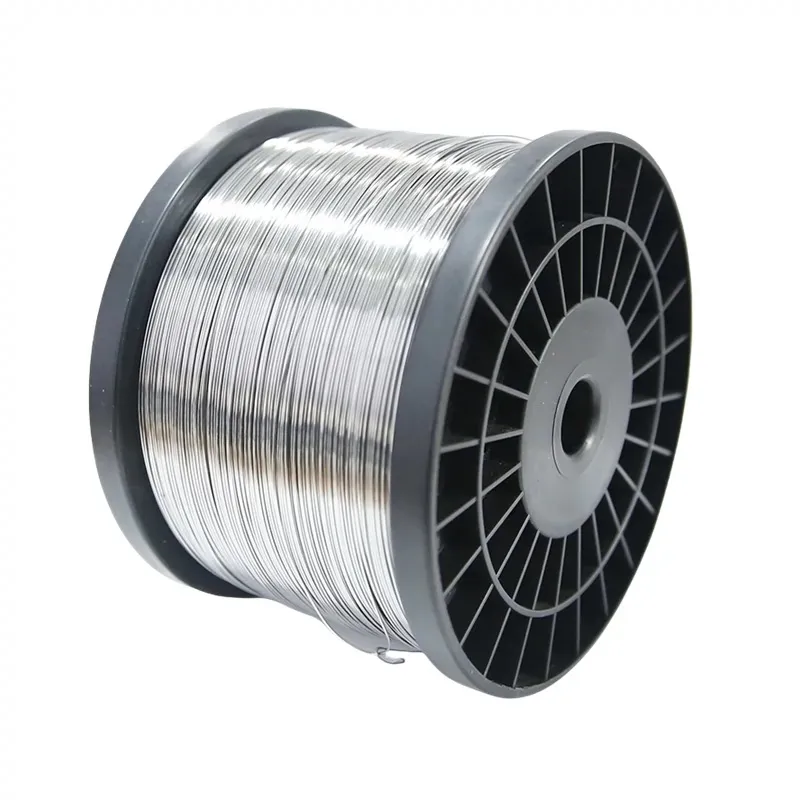
Heat-Resistant Steel Grades: Complete Selection Guide
Aug 18, 2026

Introduction
Selecting the right heat-resistant steel grade is a critical engineering decision that directly impacts equipment service life, operational safety, and total cost of ownership. Whether you are designing industrial furnace components, petrochemical heater tubes, or heat treatment fixtures, the material must maintain mechanical strength, resist oxidation, and withstand thermal cycling at temperatures ranging from 600°C to beyond 1150°C.
Not all heat-resistant steels perform equally in every environment. A grade that excels in oxidizing atmospheres may fail rapidly in carburizing conditions. A steel with excellent creep strength at 900°C can suffer from sigma-phase embrittlement when held between 650°C and 900°C for extended periods. This guide provides a comprehensive comparison of the most widely used heat-resistant steel grades-309S, 310S, 314, 330, 253MA, and 800H-covering chemical composition, mechanical properties, maximum service temperatures, and application-specific recommendations to help engineers and procurement teams make informed decisions.
What Are Heat-Resistant Steels?
Heat-resistant steels are alloy steels engineered to retain mechanical properties and resist surface degradation at elevated temperatures. Their performance depends on carefully balanced alloying elements:
- Chromium (Cr): Forms a dense, adherent Cr&sub2;O&sub3; oxide layer that protects against oxidation and sulfidation. Higher chromium content generally improves high-temperature corrosion resistance.
- Nickel (Ni): Stabilizes the austenitic structure, enhancing creep strength, ductility, and resistance to carburization. Nickel also preserves toughness after prolonged high-temperature exposure.
- Silicon (Si): Promotes a more adherent oxide scale that resists spalling during thermal cycling. Silicon additions of 1.5–2.5% significantly improve oxidation resistance in cyclic service.
- Rare earth elements (Ce): Micro-alloyed cerium stabilizes the oxide layer, as seen in grades like 253MA, improving scale adhesion and extending service life.
Heat-resistant steels are classified by metallurgical structure into austenitic, ferritic, and martensitic families. For industrial applications above 800°C, austenitic grades are the standard choice due to their superior creep strength, oxidation resistance, and weldability.
Key Heat-Resistant Steel Grades Overview
309S (UNS S30908 / EN 1.4833)
A cost-effective austenitic grade with 22–24% chromium and 12–15% nickel. Rated for continuous service up to 980°C, 309S is commonly specified for burner tips, combustion chambers, and boiler components where moderate temperature resistance is required at a competitive price point.
310S (UNS S31008 / EN 1.4845)
The industry benchmark for high-temperature oxidizing environments. With 24–26% chromium and 19–22% nickel, 310S offers excellent oxidation resistance up to 1100°C in continuous service. It is widely used for furnace liners, radiant tubes, and refinery heater tubes.
314 (UNS S31400 / EN 1.4841)
Similar to 310S but with elevated silicon content (1.5–2.5%), 314 provides superior oxidation resistance up to 1150°C and improved scale adhesion during thermal cycling. It is particularly effective in glass furnace regenerators and ceramic kilns.
330 (UNS N08330 / EN 1.4886)
The premier grade for carburizing atmospheres. With 34–37% nickel and 17–20% chromium, 330 resists carbon ingress 3–5 times longer than 310S. It is the standard material for heat treatment furnace interiors and carburizing furnace baskets.
253MA (UNS S30815 / EN 1.4893)
A modern micro-alloyed grade using cerium (0.03–0.08%) to stabilize the oxide layer. 253MA achieves performance comparable to 310S at lower alloy content, offering approximately 30% higher creep strength at 900°C and better cost efficiency for new furnace designs.
800H (UNS N08810 / EN 1.4958)
A nickel-iron-chromium alloy with controlled carbon (0.05–0.10%) and aluminum+titanium additions. 800H offers excellent creep-rupture strength up to 1100°C and is widely used in petrochemical reformer tubes and pressure vessels requiring ASME code compliance.
Chemical Composition Comparison
| Grade | UNS | EN | C (max %) | Cr (%) | Ni (%) | Si (%) | Other |
|---|---|---|---|---|---|---|---|
| 309S | S30908 | 1.4833 | 0.08 | 22.0–24.0 | 12.0–15.0 | ≤1.00 | Mn 2.0 |
| 310S | S31008 | 1.4845 | 0.08 | 24.0–26.0 | 19.0–22.0 | ≤1.50 | Mn 2.0 |
| 314 | S31400 | 1.4841 | 0.15 | 23.0–26.0 | 19.0–22.0 | 1.5–2.5 | Mn 2.0 |
| 330 | N08330 | 1.4886 | 0.08 | 17.0–20.0 | 34.0–37.0 | 0.75–1.5 | Mn 2.0 |
| 253MA | S30815 | 1.4893 | 0.09 | 21.0–23.0 | 10.0–12.0 | 1.4–2.0 | N 0.14–0.20, Ce 0.03–0.08 |
| 800H | N08810 | 1.4958 | 0.05–0.10 | 19.0–23.0 | 30.0–35.0 | ≤1.0 | Al+Ti 0.30–0.70 |
Mechanical Properties and Service Temperatures
| Grade | Tensile Strength (MPa) | Yield Strength (MPa) | Elongation (%) | Hardness | Max Continuous Temp | Max Intermittent Temp |
|---|---|---|---|---|---|---|
| 309S | 515 | 205 | 40 | 95 HRB | 980°C | 1035°C |
| 310S | 520 | 205 | 40 | 187 HB | 1100°C | 1150°C |
| 314 | 550–750 | 230 | 30 | 223 HB | 1150°C | 1200°C |
| 330 | 483–550 | 207–260 | 30–40 | 80 HRB | 1040°C | 1150°C |
| 253MA | 650 | 310 | 40 | 210 HB | 1100°C | 1150°C |
| 800H | 450 | 170 | 30 | - | 1100°C | 1150°C |
Performance Analysis
Oxidation Resistance
Oxidation resistance is primarily governed by chromium content. At elevated temperatures, chromium forms a dense Cr&sub2;O&sub3; layer on the steel surface that slows further oxidation. Among the standard heat-resistant steel grades:
- 310S forms the benchmark for oxidation resistance up to 1100°C in continuous service. Its 24–26% chromium content creates a robust protective oxide layer with annual oxidation penetration typically below 0.2 mm at 1100°C.
- 314 offers superior oxidation resistance up to 1150°C due to its elevated silicon content (1.5–2.5%). Silicon promotes a more adherent oxide scale that resists spalling during thermal cycling.
- 330 matches 310S in oxidation resistance but excels in carburizing atmospheres where 310S degrades rapidly. Its 34–37% nickel content is the key differentiator.
- 253MA uses micro-alloyed cerium to stabilize the oxide layer, achieving performance comparable to 310S at lower alloy content and cost.
Creep and Stress Rupture Strength
Creep resistance determines how long a component can bear load at temperature without unacceptable deformation. 314 and 310S maintain good creep strength up to 1000–1100°C, making them suitable for load-bearing furnace components. 330 retains significant creep strength at 815°C under long-term loading, which is why it is preferred for furnace baskets, trays, and fixtures subjected to repeated thermal cycling. 253MA offers approximately 30% higher creep strength than 310S at 900°C, making it increasingly popular for new furnace designs.
Carburization Resistance
In carburizing atmospheres (heat treatment furnaces with endothermic gas), carbon diffuses into the steel, forming brittle carbides that cause surface degradation. 330 is the industry standard for carburizing environments-its high nickel and silicon content creates a barrier against carbon ingress, lasting 3–5 times longer than 310S. 314 also performs well due to its higher silicon content. 310S has poor carburization resistance and should be avoided in carburizing furnace interiors.
Sigma-Phase Embrittlement
Austenitic steels with high chromium and moderate nickel can precipitate sigma phase (a hard, brittle intermetallic) when held in the 650–900°C range. 310S and 314 are susceptible to sigma-phase formation during prolonged exposure at these temperatures, which reduces impact toughness. 330 is highly resistant to sigma phase due to its high nickel-to-chromium ratio. 253MA is formulated to resist sigma phase through its balanced composition.
Application Selection Guide
| Application | Recommended Grade | Temperature Range | Key Reason |
|---|---|---|---|
| Furnace liners, radiant tubes | 310S | Up to 1100°C | Cost-effective oxidation resistance |
| Heat treatment baskets, fixtures | 330 | Up to 1040°C | Carburization and thermal shock resistance |
| High-silicon environments, kilns | 314 | Up to 1150°C | Superior scale adhesion |
| Burner tips, combustion chambers | 309S | Up to 980°C | Lower cost, adequate performance |
| Modern furnace designs | 253MA | Up to 1100°C | Higher creep strength at lower cost |
| Petrochemical reformer tubes | 800H | Up to 1100°C | ASME code compliance, creep-rupture strength |
For petrochemical applications, 310S is the standard choice for refinery radiant sections operating at 800–1050°C, with code compliance under ASTM A312 TP310S. For steam reformer tubes, centrifugally cast HK-40 or HP-modified grades are common, but wrought 310S is used for header piping and transfer lines. In power generation, 309S and 310S are specified for boiler tube hangers and supports exposed to flue gas up to 1000°C, while 330 provides better resistance to ash-induced corrosion in waste-to-energy plants.
FAQ
1. What is the difference between 310S and 314 heat-resistant steel?
The primary difference is silicon content. 310S contains a maximum of 1.50% silicon, while 314 contains 1.5–2.5% silicon. This higher silicon gives 314 better oxidation resistance (up to 1150°C vs. 1100°C for 310S) and improved scale adhesion during thermal cycling. However, 314 has lower ductility (30% elongation vs. 40% for 310S) and is more prone to sigma-phase embrittlement.
2. When should I choose grade 330 over 310S?
Choose 330 when your application involves carburizing atmospheres, thermal cycling, or chlorides. 330's 34–37% nickel content makes it 3–5 times more resistant to carburization than 310S. It is the standard choice for heat treatment furnace interiors, carburizing furnace components, and applications with repeated cold-to-hot cycling.
3. Is 253MA a direct replacement for 310S?
253MA (UNS S30815) can replace 310S in many oxidizing applications up to 1100°C. It offers approximately 30% higher creep strength at 900°C and better oxidation resistance due to cerium micro-alloying. However, 253MA has lower nickel content (10–12% vs. 19–22%), which may affect performance in carburizing or nitriding environments. Always verify compatibility for your specific atmosphere.
4. What is the maximum temperature for 309S stainless steel?
309S is rated for continuous service up to 980°C and intermittent service up to 1035°C. Beyond these temperatures, its 22–24% chromium content is insufficient to maintain a stable oxide layer, and oxidation rates increase rapidly. For temperatures above 1000°C, upgrade to 310S or 314.
5. Can heat-resistant steels be welded?
Yes, all austenitic heat-resistant grades (309S, 310S, 314, 330, 253MA) are weldable using standard processes such as GTAW (TIG), SMAW, and GMAW. Matching filler metals are recommended: ER310 for 310S, ER309 for 309S, and manufacturer-recommended N08330-compatible filler for 330. Post-weld heat treatment is generally not required for 310S, 309S, or 253MA, but 330 benefits from a solution anneal at 1040–1120°C followed by rapid cooling.
Conclusion
Selecting the right heat-resistant steel grade requires balancing oxidation resistance, creep strength, atmosphere compatibility, and cost. For general high-temperature oxidizing applications up to 1100°C, 310S remains the workhorse grade with proven performance and wide availability. For carburizing or thermally cyclic environments, 330 is the superior choice despite its higher cost. For the most demanding oxidation resistance up to 1150°C, 314 with its elevated silicon content is unmatched. And for new designs seeking cost optimization without sacrificing performance, 253MA offers an attractive micro-alloyed alternative.
At Hi-Temp Alloys, we supply all major heat-resistant steel grades in plate, sheet, bar, pipe, and wire forms, with full mill test certifications and global shipping. Contact our technical team to discuss your specific application requirements.
Related reading: FeCrAl vs NiCr Resistance Wire Comparison | Hastelloy C-276 vs C-22 Selection Guide | Inconel 600 vs 601 vs 625 Selection Guide | Top 5 Nickel Alloys for High-Temperature Applications