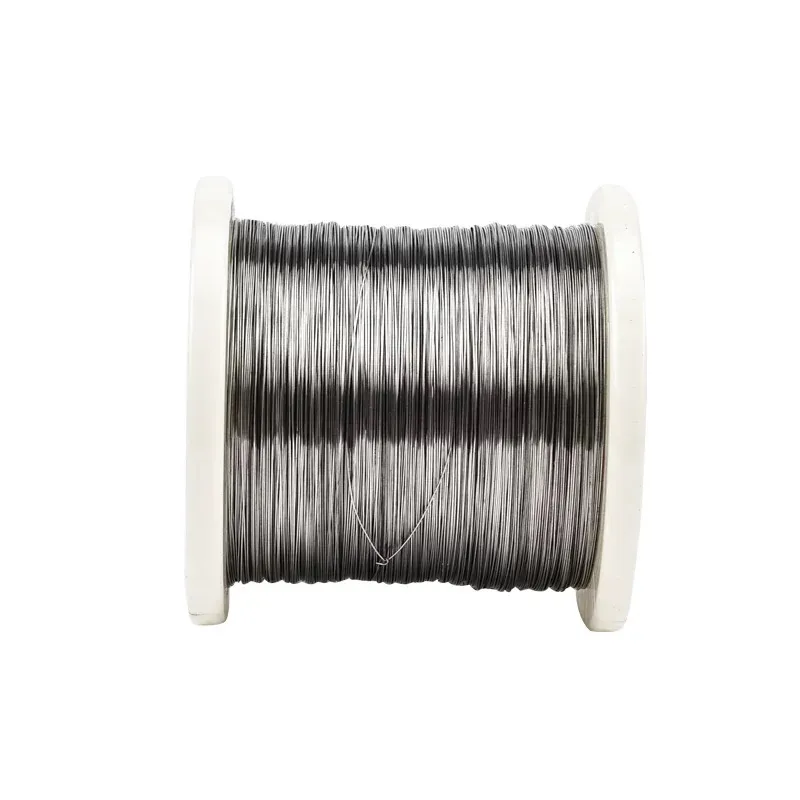
Nickel Alloy 200 vs 201: Complete Comparison Guide (Composition & Uses)
Jul 30, 2026

Nickel Alloy 200 vs 201: What's the Difference?
Meta Title: Nickel Alloy 200 vs 201: Key Differences & Applications Guide
Meta Description: Confused between Nickel Alloy 200 and 201? This complete guide compares chemical composition, mechanical properties, and applications to help you choose the right pure nickel alloy.
Target Keywords: Nickel 200 vs 201, UNS N02200, UNS N02201, pure nickel alloy comparison, commercial purity nickel
Introduction
Nickel Alloy 200 and Nickel Alloy 201 are two of the most widely used commercially pure nickel grades in the world. Both share a minimum nickel content of 99.0%, yet they differ in one critical element: carbon. This seemingly small difference has a profound impact on their performance, particularly at elevated temperatures. For engineers and procurement professionals working in chemical processing, electronics, and aerospace, understanding the distinction between UNS N02200 and UNS N02201 is essential for selecting the right material and avoiding costly failures.
This article provides a comprehensive comparison of Nickel 200 and Nickel 201, covering chemical composition, mechanical and physical properties, corrosion resistance, and application guidance to help you make an informed purchasing decision.
Product Overview
Nickel Alloy 200 (UNS N02200)
Nickel 200 is a wrought, commercially pure nickel with a nickel content of at least 99.0%. It is known for its excellent mechanical properties, outstanding resistance to corrosive environments, and high thermal and electrical conductivity. Nickel 200 is magnetic below its Curie point (approximately 360°C) and exhibits strong work-hardening characteristics, making it versatile for a wide range of cold-forming operations.
However, because its carbon content can reach up to 0.15%, Nickel 200 is susceptible to graphitization when exposed to temperatures above 315°C (600°F) for extended periods. This phenomenon causes embrittlement at grain boundaries, reducing ductility and toughness.
Nickel Alloy 201 (UNS N02201)
Nickel 201 is the low-carbon variant of Nickel 200, with carbon restricted to a maximum of 0.02%. This modification effectively eliminates the risk of graphitization, making Nickel 201 the preferred choice for applications involving sustained exposure to temperatures above 315°C. In all other respects, Nickel 201 shares the same outstanding corrosion resistance, ductility, and weldability as Nickel 200.
In practice, many manufacturers supply material that is dual-certified to both Nickel 200 and Nickel 201 specifications, provided the carbon content meets the lower threshold.
Comparison Table: Chemical Composition
| Element | Nickel 200 (UNS N02200) | Nickel 201 (UNS N02201) |
|---|---|---|
| Nickel (Ni) | ≥ 99.0% | ≥ 99.0% |
| Carbon (C) | ≤ 0.15% | ≤ 0.02% |
| Iron (Fe) | ≤ 0.40% | ≤ 0.40% |
| Silicon (Si) | ≤ 0.35% | ≤ 0.35% |
| Manganese (Mn) | ≤ 0.35% | ≤ 0.35% |
| Copper (Cu) | ≤ 0.25% | ≤ 0.25% |
| Sulfur (S) | ≤ 0.01% | ≤ 0.01% |
The sole compositional difference is the carbon limit: 0.15% for Nickel 200 versus 0.02% for Nickel 201. This single factor drives the divergent service-temperature recommendations.
Comparison Table: Mechanical and Physical Properties (Annealed)
| Property | Nickel 200 | Nickel 201 |
|---|---|---|
| Density (g/cm³) | 8.89 | 8.89 |
| Melting Point (°C) | 1435 - 1446 | 1435 - 1446 |
| Tensile Strength (MPa) | 380 - 550 | 380 - 480 |
| Yield Strength, 0.2% (MPa) | 100 - 300 | 100 - 250 |
| Elongation (%) | 40 - 60 | 40 - 55 |
| Hardness (HRB) | 70 - 90 | 60 - 80 |
| Thermal Conductivity (W/m·K) | 90 | 90 |
| Electrical Resistivity (μΩ·m) | 9.6 | 9.5 |
| Coefficient of Thermal Expansion (μm/m·K, 20-300°C) | 13.3 | 13.3 |
| Curie Temperature (°C) | ~360 | ~360 |
As the table shows, the two grades share nearly identical physical properties. Minor differences in tensile strength and hardness reflect the slight effect of carbon on the annealed microstructure.
Performance Analysis
Corrosion Resistance
Both Nickel 200 and 201 exhibit outstanding resistance to corrosion, particularly in reducing environments. They are virtually immune to chloride-induced stress corrosion cracking and perform exceptionally well in:
- Caustic alkalis (NaOH, KOH) at all concentrations and temperatures, including molten caustic
- Non-oxidizing acids such as dilute hydrochloric and sulfuric acid
- Dry halogen gases (fluorine, chlorine, bromine)
- Neutral and alkaline salt solutions
- Organic acids including fatty acids
Neither grade is recommended for strong oxidizing media such as concentrated nitric acid or ferric chloride solutions, where corrosion rates increase significantly.
The lower carbon content of Nickel 201 offers a marginal improvement in intergranular corrosion resistance after welding or thermal processing, although the difference is negligible in most service environments.
High-Temperature Performance
This is where the two grades diverge most significantly. In Nickel 200, carbon can precipitate as graphite at grain boundaries when the material is held above 315°C for prolonged periods. This graphitization embrittles the material, reducing both ductility and impact strength.
Nickel 201, with carbon limited to 0.02%, is essentially immune to this phenomenon. It is approved for service temperatures up to approximately 1230°C under appropriate atmospheric conditions, making it the standard choice for high-temperature applications such as furnace components, heat-treating baskets, and caustic evaporator tubes.
Fabricability and Weldability
Both grades offer excellent fabricability. They can be readily cold-formed by deep drawing, spinning, and bending. Work hardening is significant, so intermediate annealing may be required during severe forming operations.
Welding performance is excellent with processes such as TIG (GTAW), MIG (GMAW), and SMAW. Nickel 201 is preferred for welded assemblies that will operate above 315°C, as it avoids the risk of weld heat-affected zone graphitization. Before welding, surfaces must be thoroughly cleaned of oils, oxides, and sulfur-containing contaminants to prevent cracking.
Application Guide
When to Choose Nickel 200
Nickel 200 is ideal for applications at or below 315°C, including:
- Caustic soda handling equipment (evaporators, tanks, piping)
- Food processing vessels and storage tanks
- Salt production and refining equipment
- Electronic components, battery tabs, and lead frames
- Marine engineering parts and fasteners
- Synthetic fiber production equipment
When to Choose Nickel 201
Nickel 201 should be specified when service temperatures may exceed 315°C, including:
- High-temperature caustic evaporator tubes and concentrators
- Furnace hardware, heat-treating baskets, and fixtures
- Chemical processing vessels operating at elevated temperatures
- Aerospace and defense components requiring thermal stability
- Rocket motor cases and missile components
- Fluorine generation and hydrocarbon reaction equipment
Dual-Certified Material
Many suppliers offer dual-certified Nickel 200/201 material that meets the chemical and mechanical requirements of both grades. This is achieved when the carbon content is below 0.02%. Dual-certified material offers maximum flexibility for inventory management and is recommended when service temperature conditions are uncertain.
FAQ
1. Can I use Nickel 200 instead of Nickel 201?
Yes, but only if the service temperature remains below 315°C. Above this threshold, Nickel 200 is at risk of graphitization, which causes embrittlement. If there is any possibility of sustained temperatures above 315°C, Nickel 201 should be used.
2. What is graphitization in Nickel 200?
Graphitization is a metallurgical phenomenon where carbon dissolved in the nickel matrix precipitates as free graphite at grain boundaries when the alloy is held above approximately 315°C for extended periods. This reduces ductility and toughness, potentially leading to brittle failure.
3. Are Nickel 200 and 201 weldable?
Yes, both grades have excellent weldability using standard welding processes such as TIG, MIG, and SMAW. Matching filler metals are available. Proper surface cleaning before welding is critical to avoid porosity and cracking.
4. Is Nickel 201 more expensive than Nickel 200?
Generally, Nickel 201 carries a slight premium due to tighter carbon control during melting and refining. However, the price difference is typically small, and many distributors stock dual-certified material at a single price point.
5. What ASTM standards apply to Nickel 200 and 201?
Common ASTM specifications include ASTM B160 (rod/bar), ASTM B161 (seamless pipe/tube), ASTM B162 (plate/sheet/strip), ASTM B163 (condenser and heat exchanger tubes), and ASTM B725 (welded pipe).
Conclusion
Nickel 200 and Nickel 201 are both exceptional commercially pure nickel alloys with outstanding corrosion resistance and fabricability. The key difference lies in carbon content: Nickel 200 allows up to 0.15% C and is suitable for temperatures up to 315°C, while Nickel 201 restricts carbon to 0.02% maximum and is recommended for service above 315°C to prevent graphitization. For most applications involving caustic processing, chemical handling, or electronic manufacturing, either grade will perform well. When in doubt, specifying dual-certified Nickel 200/201 material provides the safest and most flexible solution.
Internal Link Suggestion: Link to our Nickel Alloys product page and Inconel 600 vs 601 vs 625 comparison article for additional context on nickel-based alloy selection.
For inquiries about Nickel 200, Nickel 201, or other high-temperature nickel alloys, contact us at WhatsApp/WeChat: 13815992578 or email: [email protected].