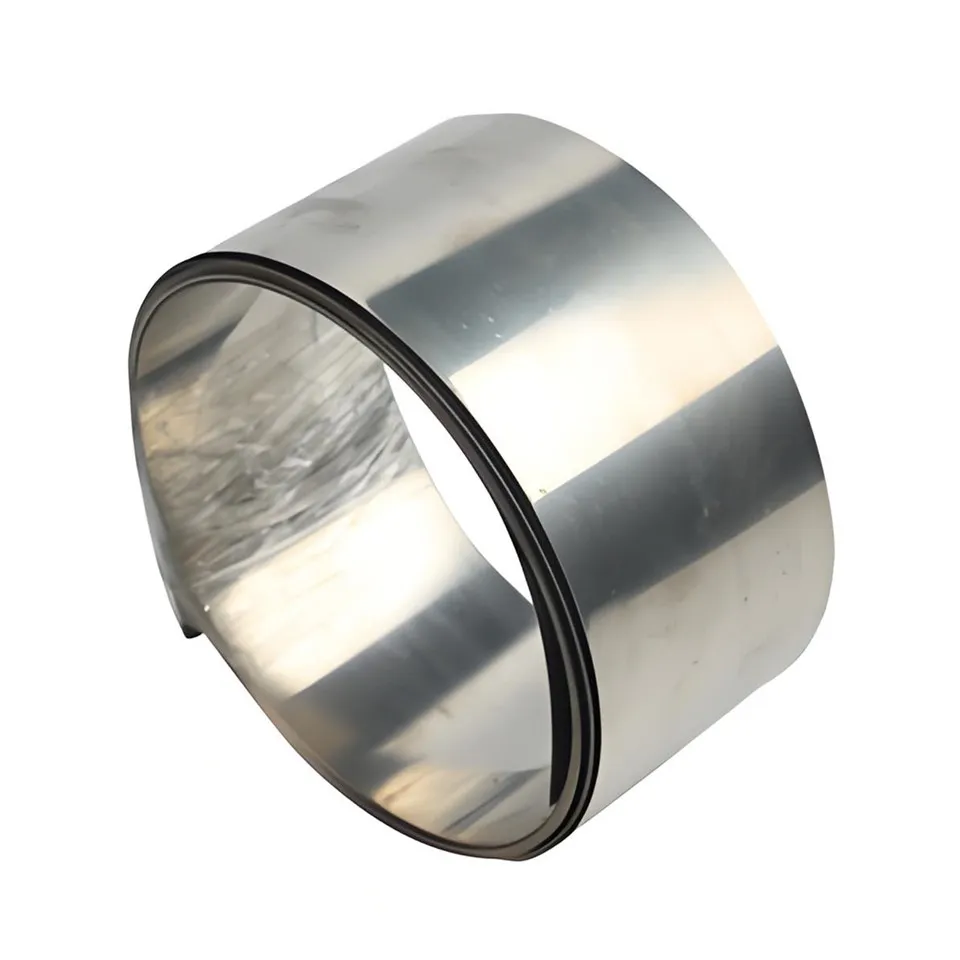
Top 5 Nickel Alloys For High-Temperature Applications
Sep 12, 2026

Introduction
Nickel-based alloys are the gold standard for high-temperature applications, offering oxidation resistance, creep strength, and structural stability that stainless steels cannot match. This guide compares the five nickel alloys we most frequently recommend at Taizhou Aoyuan Alloy Materials Co., Ltd., ranked by maximum operating temperature and overall performance.
Product Overview
1. Inconel 601 (UNS N06601) – The Oxidation Champion
A nickel-chromium-iron alloy with 1.0–1.7% aluminum that forms a dual-layer oxide scale resisting spalling under severe thermal cycling up to 1250°C. Ideal for furnace components, radiant tubes, and combustion chamber hardware.
2. Hastelloy X (UNS N06002) – The Gas Turbine Workhorse
A nickel-chromium-iron-molybdenum alloy combining high-temperature strength with oxidation resistance up to 1200°C. Developed for gas turbine combustors, it offers good creep strength below 900°C and outstanding weldability. Used in aircraft engines, furnace structural parts, and petrochemical coils.
3. Inconel 600 (UNS N06600) – The Versatile All-Rounder
The original nickel-chromium-iron alloy with ≥72% nickel, offering excellent stress corrosion cracking and caustic corrosion resistance up to 1150°C. Widely used for furnace muffle tubes, heat exchangers, and nuclear components where alkaline media are present.
4. Inconel 625 (UNS N06625) – Strength Meets Corrosion Resistance
A nickel-chromium-molybdenum-niobium alloy strengthened by solid-solution hardening. Molybdenum (8–10%) and niobium (3.15–4.15%) provide exceptional fatigue and pitting resistance up to 980°C with PREN > 50. Used in aerospace ducting, marine hardware, and chemical vessels.
5. Hastelloy C-276 (UNS N10276) – The Corrosion Specialist
A nickel-molybdenum-chromium-tungsten alloy with unmatched chemical corrosion resistance up to 1040°C. Very low carbon (≤0.01%) prevents weld sensitization. Excels in wet chlorine, reducing acids, and flue gas desulfurization systems.
Chemical Composition Comparison
| Alloy | UNS Number | Ni (%) | Cr (%) | Mo (%) | Fe (%) | W (%) | Key Strength |
|---|---|---|---|---|---|---|---|
| Inconel 601 | N06601 | 58–63 | 21–25 | – | Bal. | – | Oxidation resistance |
| Hastelloy X | N06002 | Bal. | 20.5–23 | 8–10 | 17–20 | 0.2–1.0 | Gas turbine strength |
| Inconel 600 | N06600 | ≥72 | 14–17 | – | 6–10 | – | Versatility & caustic resistance |
| Inconel 625 | N06625 | ≥58 | 20–23 | 8–10 | ≤5 | – | Strength + pitting resistance |
| Hastelloy C-276 | N10276 | Bal. | 14.5–16.5 | 15–17 | 4–7 | 3.0–4.5 | Chemical corrosion resistance |
Mechanical Properties Comparison
| Property | Inconel 601 | Hastelloy X | Inconel 600 | Inconel 625 | Hastelloy C-276 |
|---|---|---|---|---|---|
| Density (g/cm3) | 8.11 | 8.22 | 8.47 | 8.44 | 8.89 |
| Melting Range (°C) | 1320–1370 | 1260–1355 | 1370–1425 | 1350–1400 | 1323–1371 |
| Tensile Strength (MPa) | 655 | 785 | 655 | 930 | 790 |
| Yield Strength (MPa) | 310 | 345 | 310 | 517 | 355 |
| Elongation (%) | 30 | 40 | 40 | 44 | 40 |
| Max Service Temp (°C) | 1250 | 1200 | 1150 | 980 | 1040 |
Performance Analysis
Each alloy occupies a distinct niche based on its composition and strengthening mechanism.
Inconel 601 leads in oxidation resistance. Its aluminum-enhanced dual-layer oxide scale remains stable through thermal cycling up to 1250°C, outperforming alloys relying on chromium oxide alone. However, its solid-solution structure limits load-bearing capacity versus precipitation-hardened grades.
Hastelloy X provides the best combination of high-temperature strength and oxidation resistance for gas turbines. Its molybdenum and chromium content delivers creep resistance below 900°C with proven service history in aircraft engines.
Inconel 600 offers the highest nickel content (≥72%), giving excellent stress corrosion cracking and caustic corrosion resistance. Its versatility makes it popular for chemical and nuclear applications with alkaline media.
Inconel 625 delivers the highest tensile strength (930 MPa) among solid-solution strengthened grades here. Molybdenum and niobium synergistically provide structural integrity and pitting resistance, with PREN > 50 distinguishing it in chloride environments.
Hastelloy C-276 provides unmatched chemical corrosion resistance. While its maximum service temperature (1040°C) is lower, it excels where wet chlorine, reducing acids, and chloride media rapidly degrade other alloys. Its low carbon content (≤0.01%) ensures weldability without sensitization.
Application Guide
Choosing the right alloy depends on three primary factors:
- Operating temperature: For continuous service above 1100°C, Inconel 601 or Hastelloy X are the clear choices. Below 1000°C, Inconel 625 or Hastelloy C-276 may offer better value.
- Corrosion environment: In oxidizing atmospheres, Inconel 601 excels. In carburizing or sulfidizing environments, Inconel 600 or Hastelloy X perform well. For wet chemical corrosion at moderate temperatures, Hastelloy C-276 is unmatched.
- Mechanical loads: For load-bearing structural components above 900°C, Hastelloy X provides the best creep resistance. For applications where corrosion is the primary concern and loads are moderate, Hastelloy C-276 or Inconel 625 are more appropriate.
For more detailed comparisons, see our guides on Inconel 600 vs 601 vs 625 and Hastelloy vs Inconel.
FAQ
Q1: Which nickel alloy is best for temperatures above 1200°C?
Inconel 601 is the best choice for temperatures above 1200°C, with excellent oxidation resistance up to 1250°C under cyclic conditions. Its aluminum addition creates a dual-layer oxide protection that resists spalling during thermal cycling.
Q2: Can Inconel 600 replace Inconel 601 in high-temperature applications?
Inconel 600 can be used up to 1150°C in oxidizing environments, but it lacks the aluminum addition that gives Inconel 601 its superior spallation resistance. For applications involving thermal cycling above 1000°C, Inconel 601 is strongly recommended. See our Inconel 600 vs 601 vs 625 comparison for details.
Q3: What is the difference between Hastelloy X and Hastelloy C-276?
Hastelloy X is optimized for high-temperature strength and oxidation resistance up to 1200°C, making it ideal for gas turbines and furnaces. Hastelloy C-276 is designed for chemical corrosion resistance, with a maximum service temperature of approximately 1040°C. They serve fundamentally different purposes.
Q4: Is Inconel 625 suitable for marine applications?
Yes. Inconel 625 has a Pitting Resistance Equivalent Number (PREN) exceeding 50, making it highly resistant to seawater pitting and crevice corrosion. It is widely used in marine engineering, offshore oil and gas, and desalination equipment.
Q5: How do I choose between these five alloys for my application?
Consider your operating temperature, the type of corrosive environment (oxidizing, carburizing, or wet chemical), and the mechanical loads involved. For temperatures above 1100°C, choose Inconel 601 or Hastelloy X. For chemical corrosion, choose Hastelloy C-276. For combined strength and corrosion resistance below 1000°C, Inconel 625 is ideal. Contact our technical team for a detailed recommendation.
Conclusion
Inconel 601 leads in oxidation resistance, Hastelloy X dominates gas turbine applications, Inconel 600 offers versatility, Inconel 625 balances strength with corrosion resistance, and Hastelloy C-276 provides ultimate chemical corrosion protection. Match the alloy to your specific temperature, atmosphere, and load conditions to maximize equipment life. Contact us at hitempalloys.com for expert alloy selection.