

How does the thickness of nichrome heating wire affect its performance?
Dec 23, 2025
Nichrome heating wire is a crucial component in various heating applications, from industrial furnaces to household appliances. As a leading supplier of nichrome heating wire, I've witnessed firsthand the impact that wire thickness can have on performance. In this blog post, I'll delve into the relationship between the thickness of nichrome heating wire and its performance, exploring how different thicknesses can affect factors such as resistance, heat output, and durability.
Resistance and Thickness
Resistance is a fundamental property of any electrical conductor, including nichrome heating wire. It is defined as the opposition to the flow of electric current. The resistance of a wire is directly proportional to its length and inversely proportional to its cross - sectional area. Mathematically, it can be expressed using the formula (R=\rho\frac{l}{A}), where (R) is the resistance, (\rho) is the resistivity of the material (a constant for nichrome), (l) is the length of the wire, and (A=\pi r^{2}) is the cross - sectional area ((r) being the radius of the wire).
When we talk about the thickness of the wire, we are essentially referring to its cross - sectional area. A thicker nichrome wire has a larger cross - sectional area. According to the formula, as the cross - sectional area (A) increases, the resistance (R) decreases, assuming the length (l) and resistivity (\rho) remain constant.
This relationship is crucial in heating applications. For a given voltage (V) applied across the wire, according to Ohm's law (V = IR) ((I) being the current), a lower resistance wire will allow a larger current to flow. For example, if you have a thin nichrome wire with high resistance and a thick nichrome wire with low resistance, and you apply the same voltage to both, more current will flow through the thick wire.
Heat Output and Thickness
The heat output of a nichrome heating wire is determined by the power dissipated in the wire. The power (P) can be calculated using the formula (P = VI) or (P=I^{2}R) or (P=\frac{V^{2}}{R}).
If we consider the formula (P = I^{2}R), when the resistance (R) decreases due to an increase in wire thickness, and the current (I) increases (as per Ohm's law (I=\frac{V}{R}) for a constant voltage (V)), the effect on power is not straightforward. However, using the formula (P=\frac{V^{2}}{R}), we can see that for a constant voltage, as the resistance (R) decreases with increasing wire thickness, the power (P) increases.
In practical terms, a thicker nichrome wire will generally produce more heat when the same voltage is applied compared to a thinner wire. This makes thicker wires suitable for high - power heating applications where a large amount of heat is required quickly, such as in industrial heating elements for melting metals.
On the other hand, thinner wires may be preferred in applications where lower heat output is desired. For instance, in some small - scale laboratory equipment or delicate heating tasks, a thinner nichrome wire can provide a more controlled and gentle heat source.
Durability and Thickness
The durability of nichrome heating wire is also closely related to its thickness. Thicker wires are generally more durable than thinner ones. When a wire is heated, it undergoes thermal expansion and contraction. Thicker wires can better withstand these mechanical stresses because they have more material to distribute the forces.
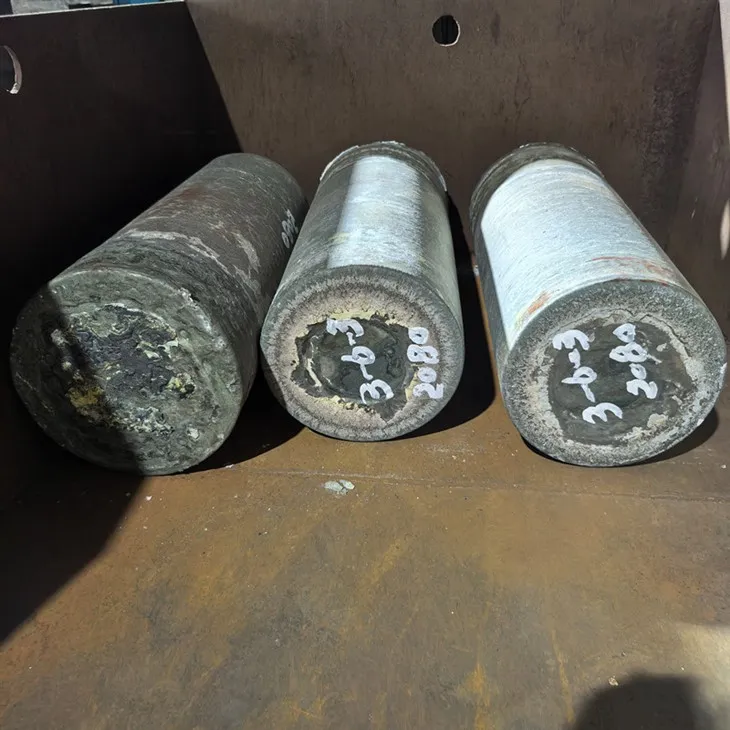

In addition, thicker nichrome wires are less likely to break due to mechanical vibrations or handling. In industrial settings where the heating elements may be subject to rough treatment, a thick wire is a more reliable choice.
However, thicker wires may take longer to heat up and cool down compared to thinner wires. This is because they have a larger mass, and it takes more energy to change their temperature. In applications where rapid heating and cooling cycles are required, such as in some high - speed manufacturing processes, this slower response time may be a drawback.
Specific Applications and Thickness Considerations
Different applications require different thicknesses of nichrome heating wire. Let's explore some common applications:
- Industrial Furnaces: Industrial furnaces need to generate a large amount of heat to reach high temperatures for processes like metal melting and heat treatment. For these applications, thick nichrome heating wires are ideal. Our Nichrome Alloy Rod is often used in such industrial furnaces. Its large cross - sectional area allows for high current flow and significant heat output, ensuring efficient and rapid heating.
- Household Appliances: Appliances like toasters, hair dryers, and electric stoves also use nichrome heating wire. In toasters, a medium - thickness wire may be used to provide a controlled amount of heat to toast the bread evenly. For hair dryers, thinner wires may be preferred to achieve a more focused and adjustable heat output. Our 8020 Nichrome Wire is a popular choice for household appliance manufacturers due to its versatility in terms of thickness options and reliable performance.
- Laboratory Equipment: Precision is key in laboratory equipment. Thinner nichrome wires are often used in applications such as heating small test tubes or providing a gentle heat source for sensitive materials. Our Ni8020 Wire 9mm Oxide Wire can be customized in different thicknesses to meet the specific requirements of laboratory experiments.
Considerations for Choosing the Right Thickness
When choosing the right thickness of nichrome heating wire for your application, several factors should be considered:
- Power Requirements: Determine the amount of heat and power needed for your application. If high power is required, a thicker wire is likely the better choice.
- Voltage: The available voltage will also affect the wire selection. For a given voltage, the resistance of the wire (which is related to its thickness) will determine the current flow and heat output.
- Space Constraints: In some applications, there may be limited space for the heating element. Thinner wires may be more suitable in such cases, even if they have lower heat output, as they can be more easily coiled or arranged in a small area.
- Lifespan: If long - term durability is a priority, a thicker wire is generally a better option, as it can withstand mechanical and thermal stresses more effectively.
Conclusion and Call to Action
In conclusion, the thickness of nichrome heating wire has a significant impact on its performance, including resistance, heat output, and durability. As a supplier of high - quality nichrome heating wire, we understand the importance of selecting the right thickness for your specific application. Whether you need a thick wire for industrial - scale heating or a thin wire for precision laboratory work, we have a wide range of products to meet your needs.
If you're interested in learning more about our nichrome heating wire products or need assistance in choosing the right thickness for your application, we encourage you to reach out to our team. We're here to provide expert advice and help you find the perfect solution for your heating requirements. Contact us today to start a procurement discussion and take your heating applications to the next level.
References
- Serway, R. A., & Jewett, J. W. (2018). Physics for Scientists and Engineers with Modern Physics. Cengage Learning.
- Boylestad, R. L. (2018). Introductory Circuit Analysis. Pearson.