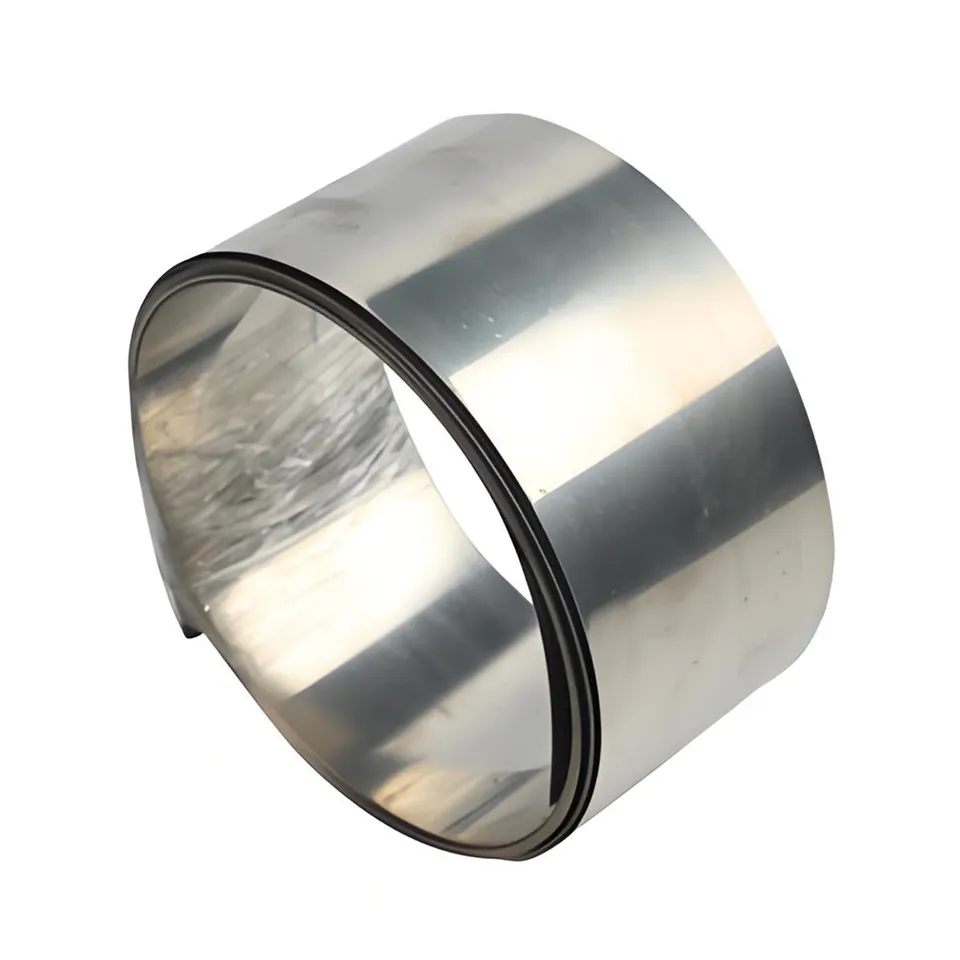
Corrosion-Resistant Alloys For Chemical Processing Industry
Aug 26, 2026

Introduction
The chemical processing industry (CPI) handles some of the most aggressive corrosive environments in industrial manufacturing. From sulfuric acid reactors and hydrochloric acid pickling lines to chlorine scrubbers and caustic evaporators, process equipment faces relentless attack from acids, alkalis, chlorides, and oxidizing agents - often at elevated temperatures and pressures.
Material failure in these environments is not simply a maintenance issue. A single corroded heat exchanger tube can cause unplanned shutdowns costing tens of thousands of dollars per day, and catastrophic leaks pose serious safety and environmental risks. Selecting the right corrosion-resistant alloy (CRA) is therefore one of the most critical engineering decisions in CPI plant design.
This guide compares five widely used corrosion-resistant alloys - Hastelloy C-276, Inconel 625, Monel 400, 904L stainless steel, and Alloy 20 - examining their chemical compositions, corrosion resistance performance, and optimal application areas to help engineers and procurement teams make informed material selections.
Product Overview
Hastelloy C-276 (UNS N10276)
A nickel-molybdenum-chromium superalloy, the gold standard for severe corrosion service. Its high molybdenum (~16%) resists reducing acids like HCl, while chromium (15.5%) protects in oxidizing media. Low carbon (<0.01%) minimizes weld precipitation, making it suitable for welded chemical structures.
Inconel 625 (UNS N06625)
A nickel-chromium-molybdenum alloy strengthened by niobium (3.15-4.15%). It combines excellent corrosion resistance with superior mechanical strength. Niobium provides solid-solution strengthening without post-weld heat treatment, ideal for flue gas desulfurization and offshore processing.
Monel 400 (UNS N04400)
A nickel-copper alloy with outstanding resistance to hydrofluoric acid, seawater, and caustic solutions. Monel 400 excels in HF alkylation units where other alloys fail. It also maintains properties at cryogenic temperatures for LNG applications.
904L Stainless Steel (UNS N08904)
A high-alloy austenitic stainless steel with 20% Cr, 25% Ni, 4.5% Mo, and 1.5% Cu. It provides cost-effective chloride pitting and sulfuric acid resistance, bridging standard stainless steels and premium nickel alloys for moderately aggressive environments.
Alloy 20 (UNS N08020)
A nickel-iron-chromium alloy developed for sulfuric acid service. With 35% Ni, 20% Cr, 3.5% Cu, and 2.5% Mo, it resists stress corrosion cracking in acid environments up to 260°C (500°F). Commonly used for heat exchangers and tanks handling H₂SO₄ up to 98%.
Comparison Table
Chemical Composition
| Element | Hastelloy C-276 | Inconel 625 | Monel 400 | 904L | Alloy 20 |
|---|---|---|---|---|---|
| Nickel (Ni) | Bal (≥57%) | Bal (≥58%) | ≥63.0% | 23.0-28.0% | 32.0-38.0% |
| Chromium (Cr) | 14.5-16.5% | 20.0-23.0% | - | 19.0-23.0% | 19.0-21.0% |
| Molybdenum (Mo) | 15.0-17.0% | 8.0-10.0% | - | 4.0-5.0% | 2.0-3.0% |
| Copper (Cu) | - | - | 28.0-34.0% | 1.0-2.0% | 3.0-4.0% |
| Iron (Fe) | 4.0-7.0% | ≤5.0% | ≤2.5% | Bal | Bal |
| Tungsten (W) | 3.0-4.5% | - | - | - | - |
| Niobium (Nb+Ta) | - | 3.15-4.15% | - | - | 8×C-1.0% |
| Carbon (C) max | 0.01% | 0.10% | 0.30% | 0.02% | 0.07% |
Physical and Mechanical Properties
| Property | C-276 | 625 | 400 | 904L | Alloy 20 |
|---|---|---|---|---|---|
| Density (g/cm³) | 8.89 | 8.44 | 8.80 | 8.00 | 8.05 |
| Melting Range (°C) | 1323-1371 | 1290-1350 | 1300-1350 | 1300-1400 | 1370-1425 |
| Tensile Strength (MPa) | 790 | 827 | 550 | 620 | 620 |
| Yield Strength (MPa) | 355 | 415 | 240 | 300 | 300 |
| Elongation (%) | 40 | 45 | 40 | 35 | 35 |
| Max Service Temp (°C) | ~500 | ~650 | ~500 | ~400 | ~500 |
Performance Analysis
Corrosion Resistance by Environment
| Environment | C-276 | 625 | 400 | 904L | Alloy 20 |
|---|---|---|---|---|---|
| Sulfuric Acid (10-50%) | Excellent | Good | Fair | Very Good | Excellent |
| Hydrochloric Acid | Good | Fair | Good | Poor | Fair |
| Nitric Acid | Good | Excellent | Poor | Good | Good |
| Chloride Pitting (PREN) | 68.3 | 51.2 | <1 | 34.9 | 28.3 |
| Caustic (NaOH) | Very Good | Good | Excellent | Fair | Good |
| Hydrofluoric Acid | Fair | Fair | Excellent | Poor | Fair |
PREN = %Cr + 3.3 × %Mo (higher = better pitting resistance)
Key Performance Insights
Hastelloy C-276 offers the broadest corrosion resistance across oxidizing and reducing environments. Its PREN of 68.3 provides virtual immunity to chloride pitting, making it ideal for multi-purpose chemical vessels. Cost is typically 3-4× the price of 904L.
Inconel 625 excels in oxidizing acids with the highest tensile strength (827 MPa). Its niobium strengthening eliminates post-weld heat treatment, making it cost-effective for FGD scrubbers. See our Inconel alloy comparison guide.
Monel 400 is unrivaled for hydrofluoric acid service. In HF alkylation units, Monel 400 components last 15-20 years where stainless steels fail within months. It also excels in caustic environments.
904L provides the best value in moderately corrosive environments. Its PREN of 34.9 far exceeds 316L (23-26), offering reliable chloride resistance at roughly half the cost of nickel alloys.
Alloy 20 is purpose-built for sulfuric acid. In concentrated H₂SO₄ at 80-98%, it outperforms C-276 in certain ranges while costing 40-50% less, thanks to its copper addition forming a protective film.
Application Selection Guide
| Application | Recommended Alloy | Rationale |
|---|---|---|
| Multi-acid waste treatment | Hastelloy C-276 | Broadest resistance to mixed acids |
| FGD scrubber internals | Inconel 625 | High strength + chloride/oxidation resistance |
| HF alkylation unit | Monel 400 | Only alloy with reliable HF resistance |
| Pulp bleaching (ClO₂) | 904L | Cost-effective chloride resistance |
| Concentrated H₂SO₄ heat exchangers | Alloy 20 | Optimized copper addition for H₂SO₄ |
| Chlorine gas handling | Hastelloy C-276 | Resists dry and wet chlorine |
| Caustic soda evaporators | Monel 400 | Excellent NaOH resistance |
| Phosphoric acid production | 904L | Good resistance at moderate cost |
For more detailed Hastelloy comparisons, see our Hastelloy C-276 vs C-22 guide and Hastelloy vs Inconel analysis.
FAQ
- What is the most corrosion-resistant alloy for chemical processing?
Hastelloy C-276 offers the broadest corrosion resistance across the widest range of acids, chlorides, and oxidizing/reducing media. However, "most resistant" depends on the specific chemical environment - Monel 400 outperforms C-276 in hydrofluoric acid, and Alloy 20 can outperform it in concentrated sulfuric acid. - Can 904L replace 316L in existing chemical equipment?
Yes, 904L is a drop-in upgrade for 316L in most applications. It has similar weldability and fabrication characteristics but significantly higher pitting resistance (PREN 35 vs 24). The main consideration is cost - 904L is approximately 1.5-2× the price of 316L. - Why is Alloy 20 specifically recommended for sulfuric acid?
Alloy 20 was developed for sulfuric acid service. Its 3-4% copper content forms a protective copper sulfide film on the surface in concentrated H₂SO₄, dramatically reducing corrosion rates. This mechanism makes it more cost-effective than nickel-molybdenum alloys in pure sulfuric acid environments. - What is the difference between Hastelloy C-276 and C-22?
Both are nickel-molybdenum-chromium alloys, but C-22 has higher chromium (21% vs 15.5%) and lower molybdenum (13% vs 16%). C-22 offers better resistance in oxidizing environments, while C-276 performs better in reducing conditions. See our C-276 vs C-22 comparison guide for details. - How does temperature affect corrosion resistance of these alloys?
Corrosion rates generally increase with temperature. Most alloys lose significant resistance above 60°C (140°F) in aggressive media. Hastelloy C-276 and Inconel 625 maintain useful resistance up to 500°C and 650°C respectively, while 904L is typically limited to below 400°C in corrosive service. Always consult corrosion charts for your specific chemical and temperature combination.
Conclusion
Selecting the right corrosion-resistant alloy for chemical processing requires understanding both the process environment and the alloy's specific strengths. Hastelloy C-276 offers the broadest protection for mixed and severe conditions, Inconel 625 combines strength with oxidation resistance, Monel 400 is unmatched for HF and caustic service, 904L provides cost-effective chloride resistance, and Alloy 20 is optimized for sulfuric acid. By matching alloy properties to specific process conditions, engineers can achieve reliable, long-lasting equipment performance while optimizing material costs.
For expert guidance on selecting corrosion-resistant alloys for your chemical processing application, contact HiTemp Alloys at +86 159 5266 1350 or [email protected].