NiCr 80/20 Vs 60/15: Which Resistance Wire To Choose?
Aug 24, 2026

Introduction
Nickel-chromium (NiCr) resistance alloys are the backbone of electric heating technology, powering everything from household toasters to industrial furnaces operating above 1000°C. Among the many grades available, NiCr 80/20 (Cr20Ni80) and NiCr 60/15 (Cr15Ni60) are the two most commonly specified. While both deliver reliable heating performance, they differ significantly in composition, temperature capability, service life, and cost. Choosing the wrong grade can lead to premature element failure or unnecessary expense. This updated technical guide compares these two alloys in depth to help engineers and procurement professionals make the optimal selection.
Product Overview
NiCr 80/20 (Cr20Ni80)
NiCr 80/20, also designated as Nichrome 80 or Cr20Ni80, is a premium resistance heating alloy containing approximately 80% nickel and 20% chromium, with iron content controlled below 1.5%. It is standardized under GB/T 1234-2023 in China, ASTM B344 (NiCr8020) in the United States, and DIN 17470 (material number 2.4869) in Germany. As the gold standard for high-temperature electric heating, NiCr 80/20 offers exceptional oxidation resistance, stable resistance over its service life, and a maximum continuous operating temperature of 1200°C.
NiCr 60/15 (Cr15Ni60)
NiCr 60/15, also known as Cr15Ni60 or Ni60Cr15, is a cost-effective nickel-chromium-iron alloy containing approximately 60% nickel, 15% chromium, with iron as the balance (approximately 22-26%). Covered by the same GB/T 1234-2023 standard, it provides reliable heating performance up to 1150°C. The substitution of nickel with iron significantly reduces material cost while maintaining adequate oxidation resistance for many mid-temperature applications.
Comparison Table
Chemical Composition
| Element | NiCr 80/20 (Cr20Ni80) | NiCr 60/15 (Cr15Ni60) |
|---|---|---|
| Nickel (Ni) | 77.0-80.0% | 57.0-60.0% |
| Chromium (Cr) | 19.0-21.0% | 15.0-18.0% |
| Iron (Fe) | ≤ 1.5% | Balance (~22-26%) |
| Manganese (Mn) | ≤ 0.70% | ≤ 1.50% |
| Silicon (Si) | 0.40-1.30% | 0.40-1.30% |
| Carbon (C) | ≤ 0.08% | ≤ 0.08% |
| Sulfur (S) | ≤ 0.015% | ≤ 0.015% |
Physical and Mechanical Properties
| Property | NiCr 80/20 | NiCr 60/15 |
|---|---|---|
| Max Operating Temperature | 1200°C | 1150°C |
| Resistivity at 20°C | 1.09 ± 0.05 μΩ·m | 1.12 ± 0.05 μΩ·m |
| Density | 8.40 g/cm³ | 8.20 g/cm³ |
| Melting Point | ~1400°C | ~1390°C |
| Thermal Conductivity (20°C) | 13.0 W/(m·K) | 13.6 W/(m·K) |
| Specific Heat Capacity | 430 J/(kg·K) | 460 J/(kg·K) |
| CTE (20-1000°C) | 17.0 × 10−&sup6;/K | 17.2 × 10−&sup6;/K |
| Tensile Strength (annealed) | ≥ 680 MPa | ≥ 640 MPa |
| Elongation | ≥ 20% | ≥ 20% |
| Magnetic Properties | Non-magnetic | Non-magnetic |
| Life Test | ≥ 110 h at 1175°C | ≥ 100 h at 1100°C |
Performance Analysis
Oxidation Resistance
The oxidation resistance of Ni-Cr alloys depends on the formation of a dense, adherent chromium oxide (Cr&sub2;O&sub3;) layer on the surface. NiCr 80/20, with its higher chromium content (19-21%) and virtually iron-free composition, forms a superior protective scale that resists spalling under thermal cycling. This results in significantly longer service life, particularly above 1000°C.
NiCr 60/15, with 15-18% chromium and substantial iron content (~24%), also forms a protective oxide layer. However, the iron component can lead to the formation of less protective iron oxides (Fe&sub2;O&sub3;) at elevated temperatures, which accelerate degradation. In practice, NiCr 60/15 performs comparably to NiCr 80/20 up to approximately 1050°C, beyond which the performance gap widens considerably.
Resistance Stability and Resistivity
Both alloys maintain excellent resistance stability over their service life - a critical property for consistent power output. The resistance temperature coefficient (CT) is 1.09 for NiCr 80/20 and 1.11 for NiCr 60/15, both measured at 20°C reference. These low values ensure minimal resistance drift during heating cycles.
The slightly higher resistivity of NiCr 60/15 (1.12 vs. 1.09 μΩ·m) can be advantageous: for a given power and voltage requirement, a shorter wire length is needed, potentially reducing material usage and simplifying element geometry. However, the difference is small enough that wire diameter and surface loading typically have a greater impact on element design.
High-Temperature Service Life
Accelerated life testing provides the most direct comparison of long-term durability. NiCr 80/20 achieves a life value of ≥110 hours at 1175°C, while NiCr 60/15 achieves ≥100 hours at 1100°C. The difference in test temperature reflects practical operating limits: NiCr 80/20 can sustain prolonged operation 75-100°C higher than NiCr 60/15 while maintaining comparable or superior service life.
Cost-Effectiveness
Nickel is the primary cost driver in both alloys. NiCr 80/20 contains approximately 80% nickel versus 60% in NiCr 60/15, with the difference made up by inexpensive iron. This 20-percentage-point reduction typically translates to a 20-30% cost reduction on a per-kilogram basis. For high-volume applications operating below 1050°C, NiCr 60/15 delivers excellent value without significant performance sacrifice.
Application Guide
When to Choose NiCr 80/20
- Industrial furnaces and kilns operating at 1000-1200°C
- Laboratory and heat treatment equipment requiring precise temperature control
- Premium appliances demanding maximum element longevity (toasters, hair dryers)
- Corrosive or oxidizing atmospheres where superior scale adhesion is needed
- Applications where maintenance downtime is costly
When to Choose NiCr 60/15
- Industrial furnaces operating below 1050°C
- Tubular heating elements for domestic and commercial appliances
- Plastic processing machinery, packaging equipment, and food warmers
- Budget-sensitive or high-volume projects
- Replacement elements where original specs allow either grade
Decision Matrix
| Requirement | Recommended Alloy | Rationale |
|---|---|---|
| Operating temp > 1100°C | NiCr 80/20 | Only 80/20 sustains 1100-1200°C |
| Operating temp ≤ 1050°C | NiCr 60/15 | Adequate performance, lower cost |
| Maximum service life | NiCr 80/20 | Superior oxidation resistance, ≥110h life test |
| Cost-sensitive, high volume | NiCr 60/15 | 20-30% lower material cost |
| Corrosive atmosphere | NiCr 80/20 | Denser, more adherent oxide layer |
| General-purpose heating | NiCr 60/15 | Good all-round performance |
FAQ
Can NiCr 60/15 Replace NiCr 80/20 in an Existing Heating Element?
Yes, provided the operating temperature does not exceed 1050°C. However, NiCr 60/15 has slightly higher resistivity (1.12 vs. 1.09 μΩ·m). When substituting wire of identical diameter and length, resistance will be approximately 2.8% higher, reducing power output by a similar margin. For precise applications, recalculate wire dimensions to maintain the same power rating.
Why Is NiCr 80/20 More Expensive Than NiCr 60/15?
The primary cost driver is nickel content. NiCr 80/20 contains approximately 80% nickel, while NiCr 60/15 contains approximately 60%, with the remaining 20% replaced by inexpensive iron. Since nickel is a high-value commodity, this composition difference translates to a 20-30% cost reduction for NiCr 60/15.
Which Alloy Is Better for Continuous Operation at 1150°C?
NiCr 80/20 is the clear choice. Its 1200°C maximum rating provides a 50°C safety margin, and its superior oxidation resistance ensures longer element life. NiCr 60/15 is rated for 1150°C maximum, meaning continuous operation at this temperature would significantly reduce service life and risks premature failure.
Are Both Alloys Available in Different Wire Forms?
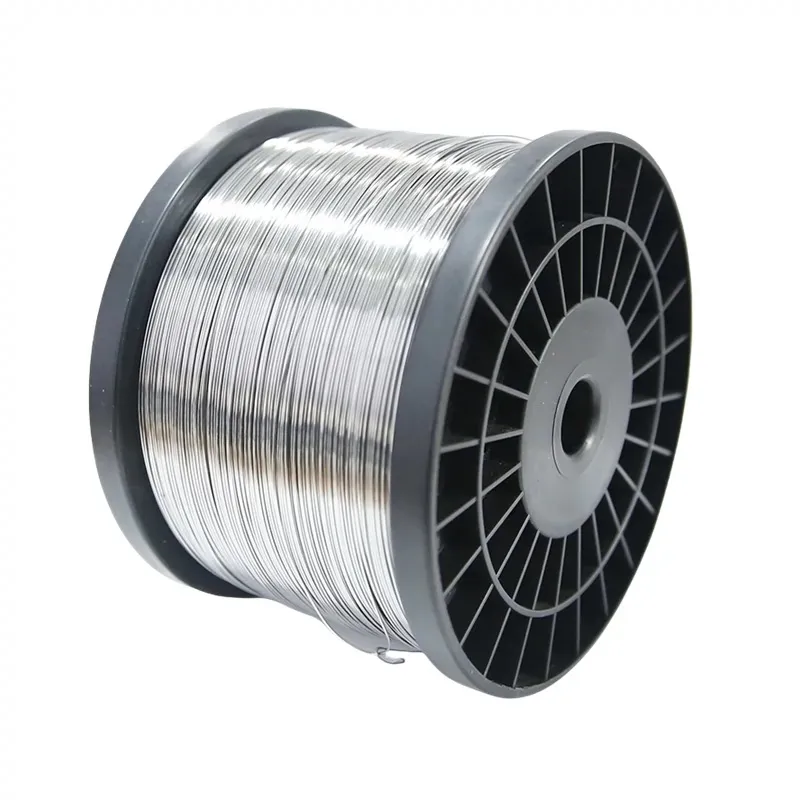
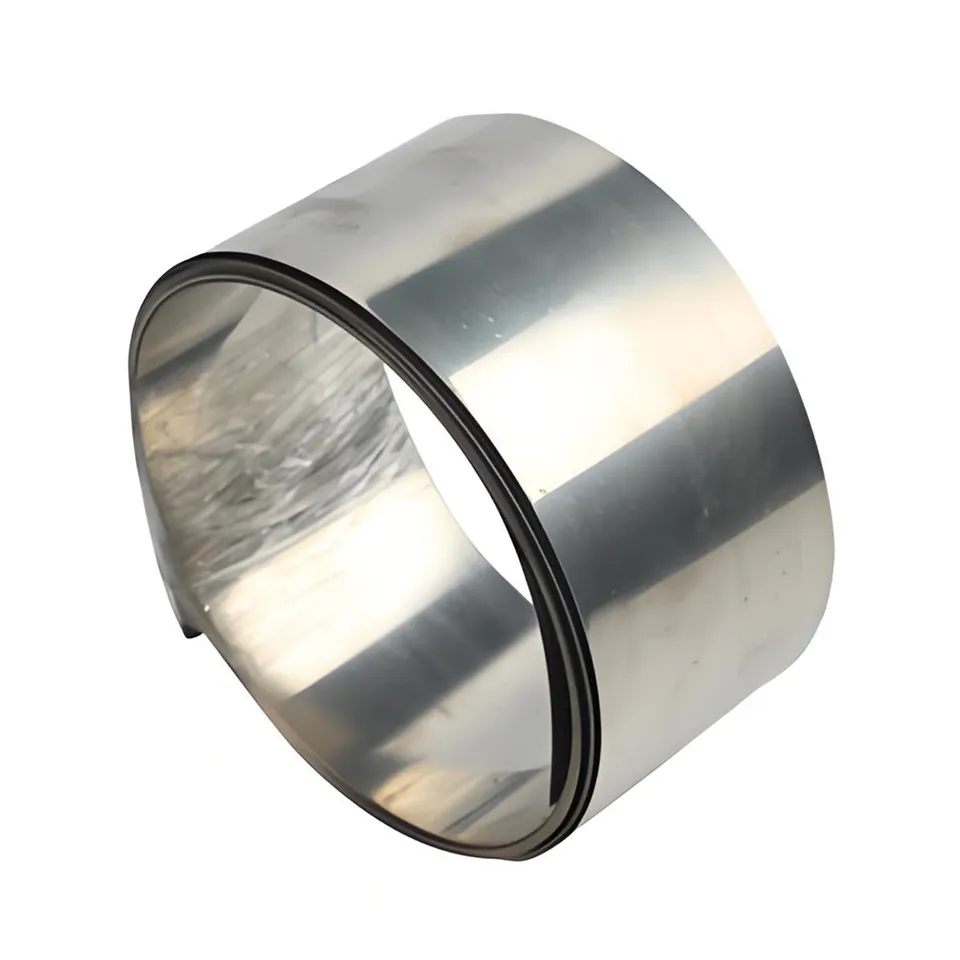
Yes. Both NiCr 80/20 and NiCr 60/15 are available in round wire, flat ribbon, and strip forms, with diameters typically ranging from 0.05 mm to 8.0 mm. Ribbon and strip forms are preferred for surface-mounted heating elements where higher surface area improves heat dissipation and reduces surface loading.
How Do I Calculate the Correct Wire Diameter?
Wire diameter depends on required power, voltage, surface loading, and operating temperature. For a complete calculation methodology including formulas and a worked example, refer to our FeCrAl Heating Element Wire Design Guide, which covers principles applicable to both FeCrAl and NiCr alloys.
Conclusion
Both NiCr 80/20 and NiCr 60/15 are proven resistance heating alloys, and the optimal choice depends on operating temperature, budget, and service life requirements. NiCr 80/20 excels in high-temperature applications up to 1200°C where maximum longevity and oxidation resistance are essential. NiCr 60/15 offers a cost-effective alternative for mid-temperature applications up to 1050°C with minimal performance compromise. For a broader comparison including FeCrAl alternatives, see our FeCrAl vs NiCr Resistance Wire Guide.
HiTemp Alloys supplies both NiCr 80/20 and NiCr 60/15 in wire, strip, and ribbon forms, with full material certifications (EN 10204 3.1) and custom dimensions available. Contact us at +86 159 5266 1350 or [email protected] to discuss your requirements.