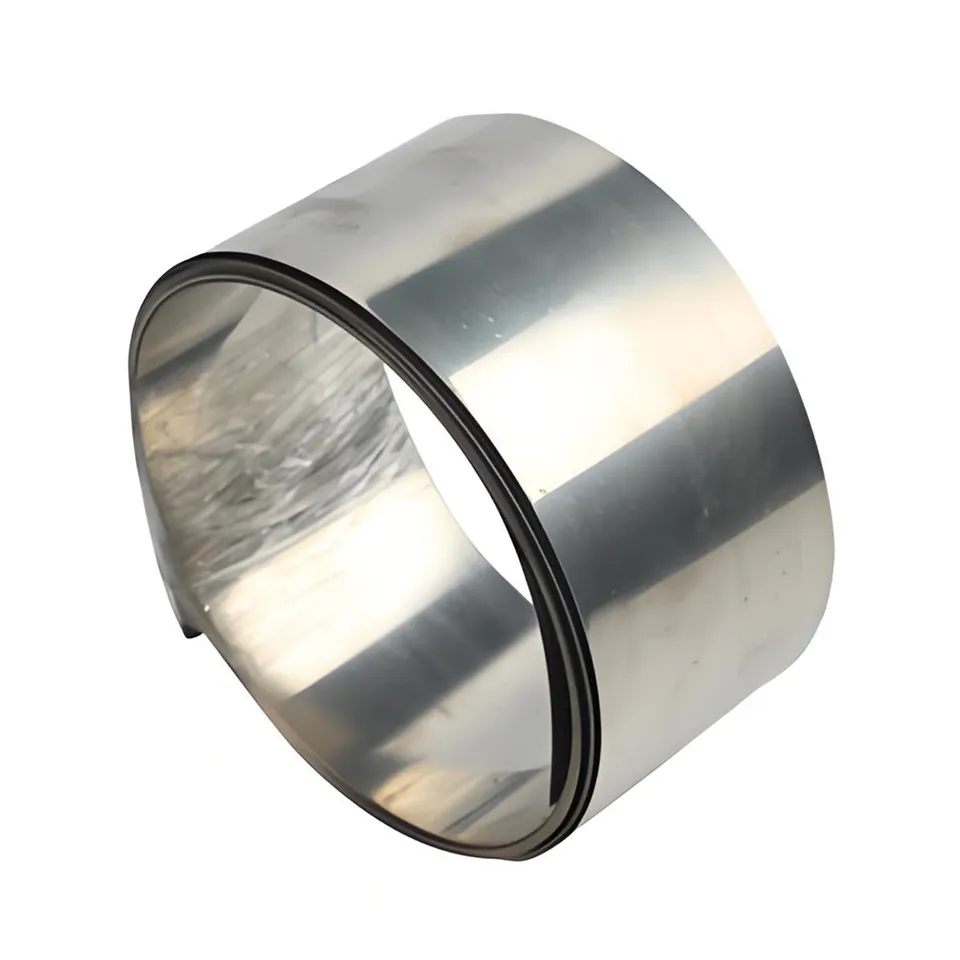
Inconel 600 Vs 601 Vs 625: Choosing The Right Superalloy
Jul 10, 2026

Introduction
Inconel superalloys are the backbone of high-temperature and corrosive engineering applications across industries. Among the most widely used grades-Inconel 600, 601, and 625-each offers a distinct balance of strength, oxidation resistance, and corrosion protection. Selecting the wrong grade can lead to premature failure, increased maintenance costs, or unnecessary material expenses. This comprehensive comparison guide helps engineers and procurement professionals understand the differences in chemical composition, mechanical properties, and real-world performance to make informed decisions for their specific applications.
Overview of Inconel 600
Inconel 600 (UNS N06600, W.Nr 2.4816) is a nickel-chromium-iron alloy with a minimum nickel content of 72%. This high nickel level gives it excellent resistance to chloride stress corrosion cracking and caustic alkali corrosion. With a maximum operating temperature of 1093°C for continuous service, Inconel 600 is a proven workhorse in chemical processing, heat treatment furnaces, and nuclear reactor components. Its relatively simple composition-without additions of aluminum, molybdenum, or niobium-makes it the most cost-effective option among the three grades, ideal for moderate high-temperature applications up to 1000°C.
Overview of Inconel 601
Inconel 601 (UNS N06001, W.Nr 2.4851) is a nickel-chromium alloy with a significant aluminum addition of 1.0–1.7%. This aluminum addition is its defining feature, enabling the formation of a tightly adherent Al2O3 + Cr2O3 composite oxide layer that provides exceptional resistance to oxidation and spalling under cyclic thermal conditions. Rated for continuous service up to 1150°C and cyclic oxidation up to 1250°C, Inconel 601 outperforms both 600 and 625 in pure high-temperature oxidizing environments. It is the go-to alloy for thermal processing equipment, combustor components, and radiant tubes where thermal cycling and oxidation are primary failure modes.
Overview of Inconel 625
Inconel 625 (UNS N06625, W.Nr 2.4856) is a nickel-chromium-molybdenum-niobium alloy designed for both high strength and comprehensive corrosion resistance. The additions of 8–10% molybdenum and 3.15–4.15% niobium provide solid-solution strengthening without requiring precipitation hardening. This gives Inconel 625 the highest tensile strength (≥690 MPa) among the three grades, along with outstanding resistance to pitting, crevice corrosion, and chloride stress corrosion cracking. While its maximum operating temperature of 980°C is lower than 600 and 601, its unmatched combination of strength and corrosion resistance makes it indispensable in marine, aerospace, chemical processing, and oil and gas applications.
Chemical Composition Comparison
| Element | Inconel 600 | Inconel 601 | Inconel 625 |
|---|---|---|---|
| Ni | ≥72% | 58–63% | ≥58% |
| Cr | 14.0–17.0% | 21.0–25.0% | 20.0–23.0% |
| Fe | 6.0–10.0% | Balance | ≤5.0% |
| Mo | - | - | 8.0–10.0% |
| Nb+Ta | - | - | 3.15–4.15% |
| Al | - | 1.0–1.7% | ≤0.4% |
| C | ≤0.15% | ≤0.10% | ≤0.10% |
| Mn | ≤1.0% | ≤1.0% | ≤0.5% |
| Si | ≤0.5% | ≤0.5% | ≤0.5% |
| Cu | ≤0.5% | ≤1.0% | - |
| Ti | - | - | ≤0.4% |
| Co | - | - | ≤1.0% |
| S | ≤0.015% | ≤0.015% | ≤0.015% |
| P | - | ≤0.03% | ≤0.015% |
Mechanical Properties Comparison
| Property | Inconel 600 | Inconel 601 | Inconel 625 |
|---|---|---|---|
| Density (g/cm3) | 8.47 | 8.11 | 8.44 |
| Melting Range (°C) | 1370–1425 | 1308–1368 | 1290–1350 |
| Tensile Strength (MPa) | ≥550 | ≥600 | ≥690 |
| Yield Strength (MPa) | ≥240 | ≥300 | ≥275 |
| Elongation (%) | ≥30 | ≥30 | ≥30 |
| Max Continuous Service Temp (°C) | 1093 | 1150 | 980 |
Performance Analysis
The three Inconel grades occupy distinct positions on the performance spectrum, and understanding these differences is critical for optimal material selection.
Oxidation Resistance: Inconel 601 leads significantly, thanks to its aluminum-enhanced Al2O3 + Cr2O3 dual oxide layer. This protective scale reforms rapidly even after spalling, making 601 the preferred choice for cyclic thermal environments up to 1250°C. Inconel 600 offers adequate oxidation resistance to 1093°C, while Inconel 625, though strong, is not designed for extreme oxidation service above 980°C.
Corrosion Resistance: Inconel 625 is the clear winner here. Its molybdenum content delivers superior resistance to pitting, crevice corrosion, and reducing acid environments. Inconel 600 excels in caustic alkali and chloride stress corrosion cracking resistance due to its high nickel content. Inconel 601 provides moderate corrosion resistance, primarily optimized for high-temperature oxidation rather than aqueous corrosion.
Mechanical Strength: Inconel 625's solid-solution strengthening from molybdenum and niobium gives it the highest tensile strength (≥690 MPa), approximately 25% greater than Inconel 600. This strength is retained without age-hardening treatments, simplifying fabrication and maintenance.
Application Guide
Inconel 600 is ideal for chemical and petrochemical processing equipment, heat exchangers, furnace components, and nuclear reactor control rod components. It excels in caustic soda handling and environments with chloride stress corrosion risks. Best for operating temperatures of 800–1000°C where cost efficiency matters.
Inconel 601 is the preferred choice for thermal processing equipment including radiant tubes, combustor cans, flame shields, strand annealing tubes, and wire annealing tubes. It is specifically suited for applications involving cyclic oxidation at 1100–1250°C, such as industrial furnaces, gas turbine components, and automotive exhaust systems.
Inconel 625 finds its niche in marine engineering, aerospace components, chemical processing valves and pumps, oil and gas downhole equipment, and pollution control systems. It is selected when both high strength and comprehensive corrosion resistance are required at temperatures up to 980°C.
FAQ
1. Which Inconel grade is best for high-temperature oxidation resistance?
Inconel 601 is the best choice for high-temperature oxidation resistance. Its aluminum addition (1.0–1.7%) forms a self-healing Al2O3 + Cr2O3 composite oxide layer that withstands cyclic oxidation up to 1250°C and continuous service up to 1150°C-significantly higher than Inconel 600 (1093°C) and Inconel 625 (980°C).
2. What is the difference between Inconel 600 and 625 in corrosion resistance?
Inconel 600, with its ≥72% nickel content, excels in caustic alkali and chloride stress corrosion cracking resistance. Inconel 625, with 8–10% molybdenum and 3.15–4.15% niobium, provides superior resistance to pitting, crevice corrosion, and reducing acids. For alkaline environments, 600 is preferred; for chloride-containing and acidic environments, 625 is the better choice.
3. Can Inconel 601 be welded?
Yes, Inconel 601 has excellent weldability. It can be welded using conventional techniques such as TIG (GTAW), MIG (GMAW), and shielded metal arc welding (SMAW). No pre-weld heat treatment is required, and matching filler metals are available. The aluminum addition does not significantly impair welding performance.
4. Which Inconel alloy is most cost-effective for chemical processing?
Inconel 600 is generally the most cost-effective option for chemical processing applications operating below 1000°C. Its simpler composition-without expensive additions of aluminum, molybdenum, or niobium-results in lower material costs while still providing excellent resistance to caustic environments and chloride stress corrosion cracking.
5. What makes Inconel 625 stronger than 600 and 601?
Inconel 625's superior strength comes from solid-solution strengthening. The additions of molybdenum (8–10%) and niobium (3.15–4.15%) atoms, which are larger than nickel atoms, distort the crystal lattice and impede dislocation movement. This mechanism provides a tensile strength of ≥690 MPa-roughly 25% higher than Inconel 600-without requiring precipitation hardening heat treatments.
Conclusion
Choosing between Inconel 600, 601, and 625 depends on your primary service requirements: Inconel 600 for cost-effective moderate-temperature corrosion resistance, Inconel 601 for extreme high-temperature oxidation resistance, and Inconel 625 for maximum strength and comprehensive corrosion protection. Matching the alloy to your application ensures optimal performance, longevity, and cost efficiency.