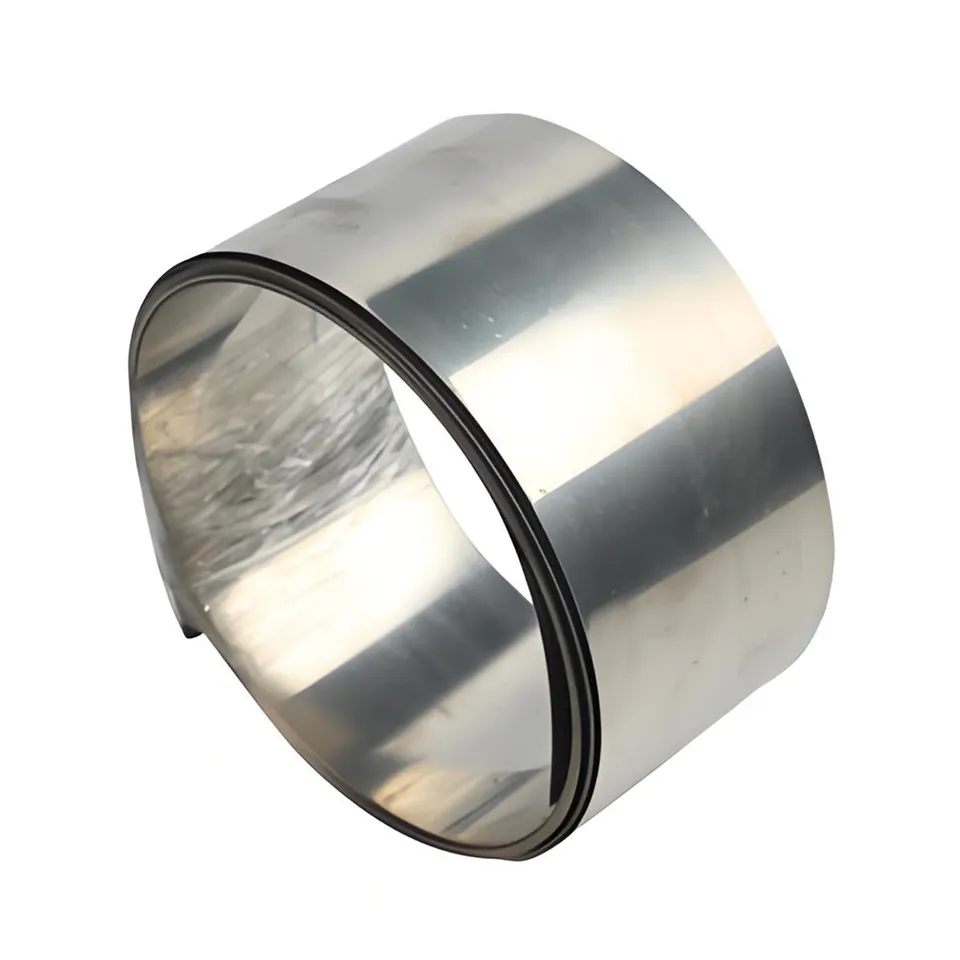
Nickel Alloy 200 Vs 201: What's The Difference?
Jul 22, 2026

Introduction
Nickel 200 and Nickel 201 are commercially pure nickel alloys (≥ 99.0% Ni) that share nearly identical compositions - with one critical exception that fundamentally changes their suitability for different operating conditions. This single compositional difference, carbon content, determines whether the material can safely serve at temperatures above 315°C without catastrophic embrittlement.
For engineers specifying materials for chemical processing, electronics manufacturing, caustic handling, and food processing equipment, confusing these two grades can lead to premature failure, costly downtime, and safety risks. This article provides a definitive comparison of Nickel 200 vs Nickel 201, covering chemical composition, mechanical properties, corrosion behavior, and application-specific recommendations.
Product Overview
Nickel 200 (UNS N02200 / W.Nr. 2.4066) is a high-purity commercial nickel with excellent mechanical properties, magnetic and magnetostrictive properties, and high thermal and electrical conductivity. It offers outstanding corrosion resistance to caustic soda and other alkaline solutions, and is widely used at temperatures below 315°C (600°F).
Nickel 201 (UNS N02201 / W.Nr. 2.4068) is the low-carbon version of Nickel 200. By restricting carbon content to ≤ 0.02% (compared to ≤ 0.15% in Nickel 200), it prevents the formation of embrittling graphite precipitates at grain boundaries when exposed to temperatures above 315°C. This makes Nickel 201 the required grade for any application operating between 315°C and 600°C.
The two alloys share identical corrosion resistance in most environments. The sole differentiator is safe operating temperature - and the consequences of getting it wrong are severe.
Comparison Table
The table below compares the chemical compositions of both alloys:
| Element | Nickel 200 (UNS N02200) | Nickel 201 (UNS N02201) |
|---|---|---|
| Ni + Co | ≥ 99.0 | ≥ 99.0 |
| C | ≤ 0.15 | ≤ 0.02 |
| Fe | ≤ 0.40 | ≤ 0.40 |
| Cu | ≤ 0.25 | ≤ 0.25 |
| Mn | ≤ 0.35 | ≤ 0.35 |
| Si | ≤ 0.35 | ≤ 0.35 |
| S | ≤ 0.01 | ≤ 0.01 |
| Ti | - | ≤ 0.10 |
| Mg | - | ≤ 0.15 |
Physical properties comparison:
| Property | Nickel 200 | Nickel 201 |
|---|---|---|
| Density (g/cm³) | 8.89 | 8.89 |
| Melting Range (°C) | 1435–1446 | 1435–1446 |
| Curie Temperature (°C) | ~360 | ~360 |
| Electrical Resistivity (μΩ·cm, 20°C) | 9.5 | 9.5 |
| Thermal Conductivity (W/m·K, 20°C) | 70 | 70 |
| Coefficient of Thermal Expansion (μm/m·K, 20–300°C) | 13.3 | 13.3 |
Mechanical properties comparison (annealed condition):
| Property | Nickel 200 | Nickel 201 |
|---|---|---|
| Tensile Strength (MPa) | 462–551 | 462–550 |
| Yield Strength, 0.2% Offset (MPa) | 148–241 | 103–148 |
| Elongation (%) | 47–55 | 47–50 |
| Hardness (HRB) | ~60 | ~60 |
| ASME Max Temperature (°C) | 315 | 600 |
Performance Analysis
The Graphite Embrittlement Problem
The defining performance difference between Nickel 200 and Nickel 201 is the phenomenon of graphite precipitation (graphitization). In Nickel 200, the relatively high carbon content (up to 0.15%) exists in solid solution at room temperature. However, when the material is held above 315°C for extended periods, carbon reacts with nickel at grain boundaries to form nickel carbide (Ni₃C), which subsequently decomposes into free graphite.
This graphite precipitates as interconnected networks along grain boundaries, dramatically reducing ductility and impact strength. Components that have undergone graphitization may appear visually normal but will fracture catastrophically under mechanical or thermal stress - a particularly dangerous failure mode because it occurs without warning.
Nickel 201 eliminates this risk entirely. With carbon restricted to ≤ 0.02%, there is insufficient carbon to form damaging graphite networks, even at temperatures up to 600°C. ASME code accordingly limits Nickel 200 to 315°C (600°F) and permits Nickel 201 up to 600°C (1112°F) for pressure vessel construction.
Corrosion Resistance
Both alloys offer virtually identical corrosion resistance:
- Caustic alkalies: Both alloys provide extraordinary resistance to caustic soda (NaOH) and caustic potash (KOH) at all concentrations and temperatures, including molten caustic. This is their primary advantage over stainless steels, which corrode rapidly in hot concentrated caustics.
- Reducing acids: Good resistance to non-oxidizing acids such as dilute hydrochloric and sulfuric acids at room temperature.
- Neutral and alkaline salt solutions: Excellent resistance to chlorides, sulfates, and carbonates.
- Dry halogens: Both resist dry fluorine and chlorine gas up to 550°C, a unique capability among metals.
- Limitations: Both alloys are vulnerable to oxidizing salt solutions (nitrates, chromates) and acids containing oxidizing agents (nitric acid, oxidizing chloride solutions).
Mechanical Performance
At room temperature, the two alloys are mechanically similar, with Nickel 200 typically showing slightly higher yield strength due to its higher carbon content providing modest solid-solution strengthening. At elevated temperatures, Nickel 201 actually outperforms Nickel 200 because it does not suffer graphite-induced embrittlement - its high-temperature tensile and creep properties are stable and predictable.
Fabrication Characteristics
Both alloys exhibit excellent weldability, formability, and machinability:
- Welding: Readily welded by gas tungsten arc (GTAW), gas metal arc (GMAW), shielded metal arc (SMAW), and resistance welding. Matching filler metals (ERNi-1) should be used. No preheating is required.
- Forming: Excellent cold-forming characteristics with ductility comparable to soft steel. Can be deep-drawn, spun, stamped, and roll-formed.
- Machining: Tends to be gummy and work-harden; requires sharp tools, slow speeds, and adequate lubrication.
Application Guide
| Application | Recommended Grade | Service Temp | Rationale |
|---|---|---|---|
| Caustic soda evaporators (high temp) | Nickel 201 | 300–500°C | No graphitization risk; proven caustic resistance |
| Caustic processing equipment (ambient) | Nickel 200 | < 315°C | Adequate performance; lower cost |
| Fluorine and chlorine dry gas handling | Nickel 201 | Up to 550°C | High-temp halogen resistance |
| Food processing equipment | Nickel 200 or 201 | Ambient | FDA-compliant; product purity preservation |
| Electronic components (lead frames, battery contacts) | Nickel 200 | < 100°C | High electrical conductivity; magnetic properties |
| Viscose rayon production | Nickel 201 | > 315°C | Resistant to process chemicals at elevated temperature |
| Phenol storage and transport | Nickel 200 or 201 | Ambient | Immune to phenol attack; product purity |
| Salt production (caustic cell diaphragms) | Nickel 201 | > 300°C | Caustic resistance at high operating temperatures |
| Hydrofluoric acid alkylation units | Nickel 201 | > 315°C | HF resistance at process temperature |
FAQ
Q1: Can I substitute Nickel 200 for Nickel 201 to save cost?
Only if the maximum service temperature will never exceed 315°C (600°F). Above this temperature, Nickel 200 will suffer graphite embrittlement, which is irreversible and can cause sudden catastrophic failure. For any uncertainty about operating temperature excursions, always specify Nickel 201.
Q2: How can I tell if a component has been graphitized?
Graphitization is difficult to detect visually - the component surface appears normal. Confirmation requires metallographic examination (microscopy) of a cross-section, which reveals graphite networks at grain boundaries. Non-destructive detection is not reliable, which is why prevention through correct material selection is essential.
Q3: Are Nickel 200 and 201 interchangeable for welding filler metal?
For most applications, ERNi-1 filler metal is used for both, as it has low carbon content. When welding Nickel 200 components that will operate below 315°C, the low-carbon filler is acceptable and does not compromise joint integrity.
Q4: Why is Nickel 201 more expensive than Nickel 200?
The tighter carbon specification (≤ 0.02% vs. ≤ 0.15%) requires more controlled melting and refining processes, which increases production cost. The price premium is typically 5–15%, which is negligible compared to the cost of a graphitization-induced failure.
Q5: Do Nickel 200 and 201 resist hydrochloric acid?
Both alloys resist dilute (≤ 10%) HCl at room temperature, but resistance drops sharply with increasing concentration and temperature. For concentrated or hot HCl, alloys like Hastelloy C-276 or B-2 are far superior choices. Nickel 200/201's true specialty is caustic and halogen resistance, not acid resistance.
Conclusion
The difference between Nickel 200 and Nickel 201 can be summarized in one word: carbon. While the 0.13% maximum carbon difference may seem negligible, it determines whether a component will survive 20 years of service or fail catastrophically after 6 months at elevated temperature.
The selection rule is straightforward: for service temperatures at or below 315°C, either grade is acceptable; for any service above 315°C, only Nickel 201 is safe. Given the severe consequences of graphitization-induced failure and the modest price difference, many engineers default to Nickel 201 for all applications to eliminate the risk of misidentification or unexpected temperature excursions.
By understanding the compositional, mechanical, and performance distinctions outlined in this guide, specifiers can make informed decisions that ensure long-term reliability and safety for their nickel alloy applications.