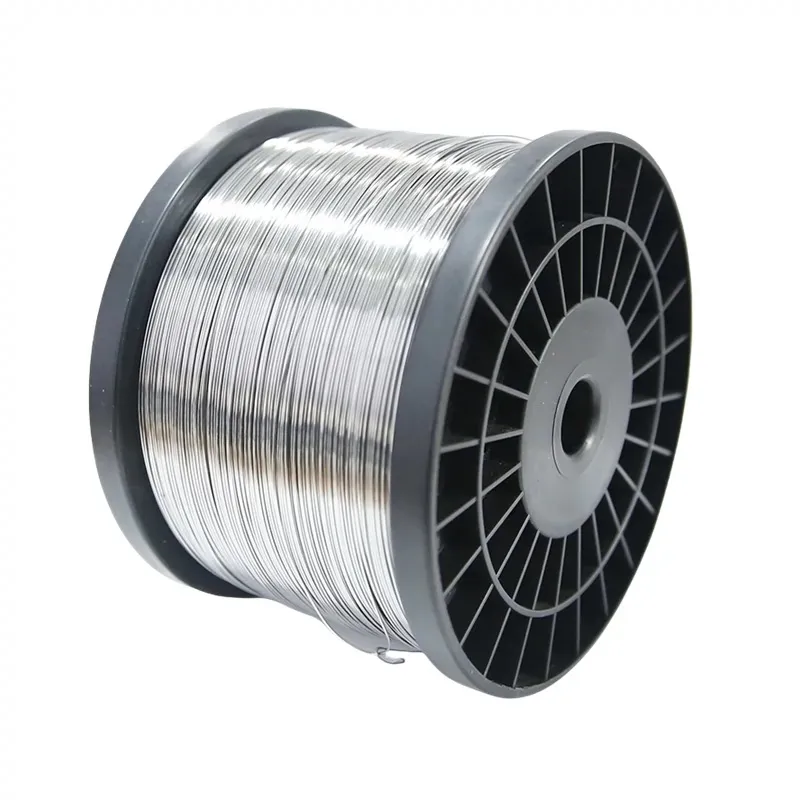
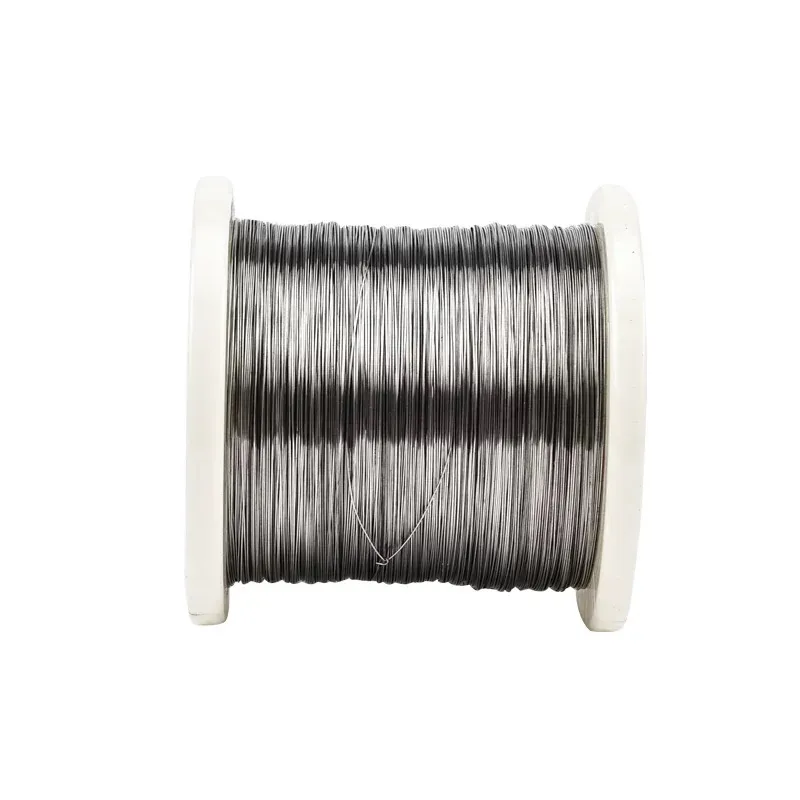
Welding Hastelloy: Best Practices And Common Issues
Jul 22, 2026

Introduction
Hastelloy alloys - particularly C-276, C-22, and B-2 - are among the most corrosion-resistant metals available in industry. Their exceptional performance in aggressive chemical environments makes them indispensable for flue gas desulfurization (FGD) systems, chemical processing reactors, pharmaceutical equipment, and waste incineration plants. However, welding these nickel-based alloys requires significantly more care than welding standard stainless steels. Improper welding procedures can degrade corrosion resistance, induce hot cracking, or create weld defects that lead to premature failure in service.
This guide covers the essential welding practices for Hastelloy C-276, C-22, and related grades, including filler metal selection, joint preparation, welding parameters, post-weld inspection, and troubleshooting common issues. It is written for welding engineers, fabricators, and procurement professionals who need to ensure welded Hastelloy components perform reliably in corrosive service.
Product Overview
The Hastelloy family encompasses several grades designed for specific corrosive environments. The most commonly welded grades include:
- Hastelloy C-276 (UNS N10276): A Ni-Cr-Mo-W alloy with 15% Cr, 16% Mo, 4% W, and ultra-low carbon (≤ 0.01%). It is the most widely used grade for severe corrosion environments, particularly in flue gas desulfurization and chemical processing. Its low carbon and silicon content eliminates carbide precipitation and minimizes intermetallic phase formation, allowing it to be used in the as-welded condition without post-weld heat treatment.
- Hastelloy C-22 (UNS N06022): A Ni-Cr-Mo-W alloy with 22% Cr, 13% Mo, 3% W. Its higher chromium content provides superior resistance to oxidizing environments, while the balanced Mo and W provide resistance to localized corrosion. It offers better overall corrosion resistance than C-276 in many mixed-acid environments.
- Hastelloy B-2 (UNS N10665): A Ni-Mo alloy with 28% Mo and no chromium. It excels in pure hydrochloric acid service but is highly susceptible to oxidation in the heat-affected zone (HAZ) and should not be exposed to oxidizing environments.
Comparison Table
Chemical composition of common Hastelloy grades:
| Element | C-276 (N10276) | C-22 (N06022) | C-2000 (N06200) | B-2 (N10665) |
|---|---|---|---|---|
| Ni | Bal. | Bal. | Bal. | Bal. |
| Cr | 14.5–16.5 | 20.0–22.5 | 22.0–24.0 | ≤ 1.0 |
| Mo | 15.0–17.0 | 12.5–14.5 | 15.0–17.0 | 26.0–30.0 |
| W | 3.0–4.5 | 2.5–3.5 | - | - |
| Fe | 4.0–7.0 | 2.0–6.0 | ≤ 3.0 | ≤ 2.0 |
| Co | ≤ 2.5 | ≤ 2.5 | ≤ 2.0 | ≤ 1.0 |
| C | ≤ 0.01 | ≤ 0.015 | ≤ 0.010 | ≤ 0.02 |
| Si | ≤ 0.08 | ≤ 0.08 | ≤ 0.08 | ≤ 0.10 |
| Mn | ≤ 1.0 | ≤ 0.5 | ≤ 0.5 | ≤ 1.0 |
Welding parameters comparison:
| Parameter | C-276 | C-22 | B-2 |
|---|---|---|---|
| Recommended Filler Metal | ERNiCrMo-4 | ERNiCrMo-10 | ERNiMo-7 |
| Process | GTAW (preferred) | GTAW (preferred) | GTAW (mandatory) |
| Heat Input (kJ/mm) | 0.8–1.5 | 0.8–1.5 | 0.5–1.0 |
| Max Interpass Temp (°C) | 95 | 95 | 65 |
| Preheat Required | No | No | No |
| PWHT Required | No | No | No |
| Shielding Gas | 100% Ar or Ar/He | 100% Ar or Ar/He | 100% Ar |
| Backing Gas | 100% Ar (mandatory) | 100% Ar (mandatory) | 100% Ar (mandatory) |
| Wire Diameter (mm) | 1.6–2.4 | 1.6–2.4 | 1.6–2.4 |
Physical properties affecting welding:
| Property | C-276 | C-22 | B-2 | Carbon Steel (ref.) |
|---|---|---|---|---|
| Density (g/cm³) | 8.89 | 8.69 | 9.22 | 7.85 |
| Melting Range (°C) | 1323–1371 | 1357–1399 | 1330–1380 | 1420–1500 |
| Thermal Conductivity (W/m·K, 25°C) | 9.8 | 10.1 | 11.2 | 51.9 |
| CTE (μm/m·K, 20–100°C) | 11.2 | 12.4 | 10.3 | 12.0 |
| Electrical Resistivity (μΩ·cm) | 130 | 114 | 137 | 17 |
Performance Analysis
Key Welding Challenges
1. Low Thermal Conductivity
Hastelloy alloys have thermal conductivity only 15–20% of carbon steel. This means weld heat is concentrated near the weld pool rather than dissipating into the base metal. The practical consequence is that the weld pool runs hotter and more fluid than steel welders expect. Lower amperage (typically 15–25% less than carbon steel for the same thickness) and faster travel speeds are required.
2. Sluggish Weld Pool
The high viscosity of nickel-alloy weld pools means they flow and wet more slowly than steel. Welders must pause at the toes of the weld to ensure proper sidewall fusion. Stringer beads with minimal weave are recommended; if weaving is necessary, limit to 2.5× the electrode diameter.
3. Sensitivity to Surface Contamination
Sulfur, phosphorus, lead, and low-melting-point contaminants cause hot cracking in Hastelloy welds. All surfaces within 25 mm of the weld joint must be thoroughly cleaned with acetone or alcohol before welding. Do not use markers, cutting fluids, or grinding wheels that have been used on carbon steel - they can transfer sulfur and iron contamination.
4. Oxidation and Color Tint
Hastelloy welds that show brown or blue discoloration in the HAZ indicate insufficient shielding gas coverage. Any color tint must be removed by grinding or pickling, as the oxidized layer has significantly reduced corrosion resistance. Backing gas (100% argon) is mandatory for the root pass on all Hastelloy welds.
Filler Metal Selection
The golden rule for Hastelloy welding is to use a matching filler metal - the filler should have the same or higher alloy content as the base metal:
- C-276 base metal → ERNiCrMo-4 filler: Exact chemistry match ensures the weld deposit has identical corrosion resistance
- C-22 base metal → ERNiCrMo-10 filler: Matching chemistry; provides optimal resistance in oxidizing environments
- C-276 to C-22 dissimilar → ERNiCrMo-10: The higher chromium of C-22 filler covers both grades
- C-276 to stainless steel → ERNiCrMo-4: Match to the more corrosion-resistant alloy
- C-276 to carbon steel → ERNiCrMo-3: Overmatching filler accommodates iron dilution
Never use ERNiCr-3 (Inconel 82) for Hastelloy-to-Hastelloy welds - it lacks molybdenum and tungsten, and the weld deposit will have significantly lower pitting and crevice corrosion resistance.
Joint Design and Preparation
Hastelloy requires wider joint angles than carbon steel due to the sluggish weld pool:
| Thickness (mm) | Joint Type | Groove Angle | Root Gap (mm) | Root Face (mm) |
|---|---|---|---|---|
| 1.0–3.0 | Square butt | - | 0–1.0 | - |
| 3.0–6.0 | V-groove | 70–80° | 2.0–3.0 | 1.0–1.5 |
| 6.0–12.0 | V-groove | 75–80° | 2.5–3.5 | 1.5–2.0 |
| > 12.0 | Double-V | 70–80° | 2.5–3.5 | 1.5–2.5 |
Heat Input Control
Controlling heat input is critical for maintaining corrosion resistance. Excessive heat input promotes grain growth in the HAZ, increases the width of the sensitized zone, and can cause microsegregation of Mo and W in the weld metal:
| Process | Recommended Heat Input | Notes |
|---|---|---|
| GTAW (TIG) | 0.8–1.5 kJ/mm | Preferred process for all Hastelloy grades |
| GMAW (MIG) | 1.0–2.0 kJ/mm | Acceptable; use pulsed transfer |
| SMAW | 1.0–1.8 kJ/mm | Use only when GTAW/GMAW not feasible |
| SAW | Not recommended | - |
Calculate heat input: H = (60 × A × V) / (1000 × S), where A = amperage, V = voltage, S = travel speed (mm/min).
Common Welding Defects and Solutions
| Defect | Cause | Solution |
|---|---|---|
| Hot cracking | High sulfur/phosphorus, concave bead, high heat input | Clean surfaces thoroughly; use convex beads; reduce heat input to <1.5 kJ/mm |
| Porosity | Moisture, dirty filler, insufficient shielding | Use dry filler; 100% Ar shielding; clean joint surfaces |
| Lack of fusion | Sluggish pool, low heat, fast travel | Increase amperage slightly; pause at sidewalls; reduce travel speed |
| Tungsten inclusion | Excessive stick-out, touching weld pool | Reduce electrode extension to 4–5 mm; maintain proper arc length |
| HAZ corrosion | Oxidized HAZ not removed | Grind to bright metal; pickle with HNO₃/HF solution |
| Root oxidation | Insufficient backing gas | 100% Ar backing gas at 5–10 L/min; verify gas flow before welding |
Application Guide
| Application | Grade | Filler Metal | Key Considerations |
|---|---|---|---|
| FGD scrubber welds | C-276 | ERNiCrMo-4 | Low heat input; no PWHT; backing gas mandatory |
| Chemical reactor vessels | C-276/C-22 | ERNiCrMo-4/10 | PMI verification; post-weld pickling |
| Pharmaceutical equipment | C-22 | ERNiCrMo-10 | Smooth weld profiles; electropolishing after welding |
| HCl processing equipment | B-2 | ERNiMo-7 | GTAW only; avoid oxidizing environments |
| Waste incineration boilers | C-276 | ERNiCrMo-4 | Thermal cycling; inspect weld toes for cracking |
| Offshore oil & gas piping | C-276 | ERNiCrMo-4 | NACE MR0175 compliance; hardness < 22 HRC |
| Clad plate welding | C-276 on steel | ERNiCrMo-3 (1st) / ERNiCrMo-4 (2nd) | Two-layer approach; first layer absorbs Fe dilution |
| Dissimilar: C-276 to 316L | C-276 + 316L | ERNiCrMo-4 | Match to more noble alloy; verify PREN of weld deposit |
| Repair welds | C-276 | ERNiCrMo-4 | Grind out defects completely; re-qualify WPS |
FAQ
Q1: Does Hastelloy C-276 require post-weld heat treatment (PWHT)?
No. One of the key advantages of C-276 over older grades (like C) is its ultra-low carbon content (≤ 0.01%), which prevents carbide precipitation in the HAZ. This means the alloy retains its full corrosion resistance in the as-welded condition. In fact, PWHT in the 540–870°C range can be harmful - it promotes carbide and intermetallic phase precipitation that degrades corrosion resistance. If stress relief is absolutely necessary for dimensional stability, keep it below 540°C.
Q2: Why do my Hastelloy welds have brown/blue discoloration, and is it a problem?
Discoloration indicates oxidation of the weld surface due to insufficient shielding gas coverage or lack of backing gas. The colored oxide layer has significantly reduced corrosion resistance and must be removed. Clean by grinding to bright metal or pickling with a solution of 20% HNO₃ + 3% HF in water at room temperature for 10–30 minutes. To prevent recurrence: increase shielding gas flow (15–20 L/min), add a trailing shield for long welds, and verify backing gas is flowing before striking the arc.
Q3: Can I weld Hastelloy C-276 with ERNiCrMo-3 (Inconel 625 filler) to save cost?
Not recommended for critical service. ERNiCrMo-3 contains only 8–10% Mo (vs. 15–17% in ERNiCrMo-4) and has no tungsten. The weld deposit will have lower pitting resistance equivalent (PREN ≈ 41 vs. ≈ 48 for C-276). For non-critical or moderate corrosion environments, ERNiCrMo-3 may be acceptable, but the cost savings will be minimal compared to the risk of premature weld failure. Always match the filler to the base metal for corrosion-critical applications.
Q4: What is the maximum recommended interpass temperature for Hastelloy welding?
95°C for C-276 and C-22, and 65°C for B-2. Exceeding these temperatures increases the risk of hot cracking and reduces the corrosion resistance of the weld deposit. Use temperature-indicating crayons or a contact pyrometer to monitor interpass temperature. Allow the weld to cool between passes if necessary - use compressed air or water quenching (with subsequent drying) if faster cooling is required.
Q5: How do I qualify a welding procedure (WPS) for Hastelloy C-276?
Welding procedure qualification follows ASME Section IX (P-No. 43 for Ni-Cr-Mo alloys). Essential variables include: base metal thickness range, filler metal classification (F-No. 43), heat input limits, interpass temperature, shielding gas composition, and backing gas presence. Required tests typically include tensile testing, bend testing (face and root), and corrosion testing (ASTM G28A or G48) to verify weld deposit corrosion resistance. Impact testing may be required for cryogenic applications.
Conclusion
Welding Hastelloy alloys successfully requires a fundamentally different approach from carbon steel or even stainless steel welding. The combination of low thermal conductivity, sluggish weld pool behavior, and extreme sensitivity to contamination demands meticulous preparation, precise parameter control, and rigorous inspection.
The five non-negotiable rules for welding Hastelloy are: (1) use matching filler metals - ERNiCrMo-4 for C-276, ERNiCrMo-10 for C-22; (2) maintain low heat input (0.8–1.5 kJ/mm GTAW); (3) keep interpass temperature below 95°C; (4) use 100% argon shielding and backing gas with no color tint; and (5) clean all surfaces within 25 mm of the joint to bare metal before welding.
By following these practices, fabricators can produce welds that match the base metal's corrosion resistance and deliver the long-term performance that justifies the premium cost of Hastelloy alloys. For complementary information on filler metal selection across all specialty alloys, refer to our filler metal selection guide.